
Explainable AI (XAI): How AI Decisions Become Transparent
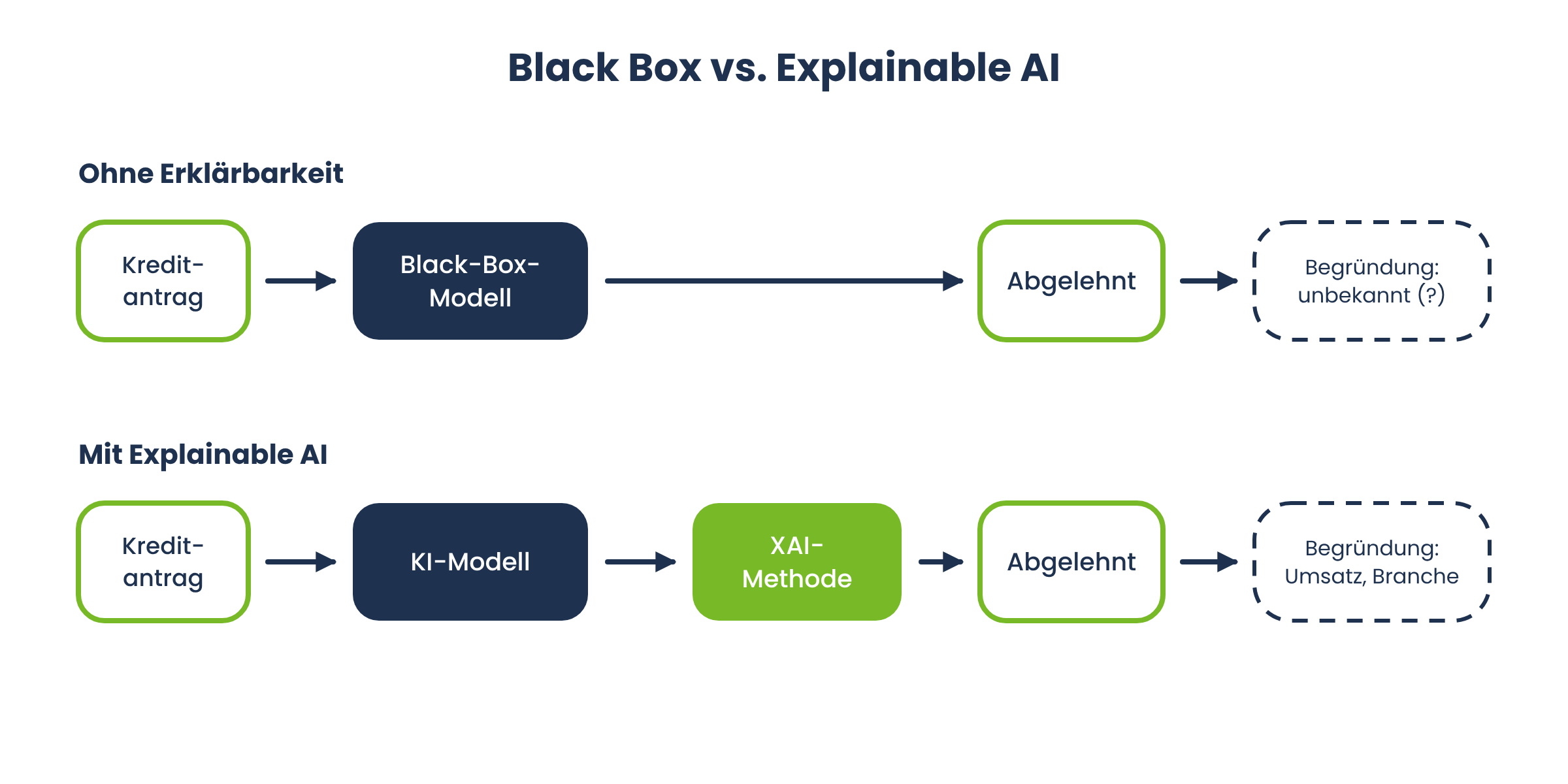
A company applies for a loan. The bank uses an AI model to automatically evaluate applications. Within seconds, the answer comes back: denied. But why? Neither the loan officer nor the applicant can understand which factors led to this decision. Was it revenue trends, the industry, or a single outlier in the accounting data? Without an answer, all that remains is frustration—and, in the worst case, the suspicion of unfair treatment.
This scenario illustrates why Explainable AI (XAI) is indispensable for businesses today. The more decisions are delegated to AI systems, the more important it becomes to understand how these systems arrive at their results. This applies to lending just as much as it does to medical diagnoses, hiring processes, or the automated review of insurance claims. Explainable AI provides the tools to open up this very “black box.”
In this article, you’ll learn what Explainable AI actually means, what methods underpin it, and why XAI is no longer just a technical detail but a regulatory and economic necessity.
What is Explainable AI (XAI)? A definition:
Explainable AI, or XAI for short, refers to a set of methods and processes that make the decisions and predictions of AI models understandable to humans. The term encompasses both technical methods that explain individual predictions and overarching concepts such as model transparency and documentation.
To understand XAI, it helps to look at the underlying problem: Modern artificial intelligence is often based on machine learning (ML), particularly on deep neural networks (deep learning). These models learn from large amounts of data by identifying patterns and correlations within it and deriving predictions from them. The result is often an impressively high level of predictive accuracy, but also a model whose internal logic is barely comprehensible even to its developers. This is referred to as a black-box model.
This is exactly where Explainable AI comes in. It provides answers to questions such as: Which features of a dataset were decisive for a particular prediction? How would the result have changed if an input had been different? And can the model’s overall behavior be summarized in understandable rules? It’s important to note that XAI does not replace a model’s performance, but rather complements it with a second, equally important dimension—understanding.
Real-World Examples: Where Is Explainable AI Used Today?
The theoretical concepts of Explainable AI only reveal their value in a specific application context. Three areas illustrate particularly clearly how requirements for explainability can vary depending on the industry.
Example #1: Finance and Lending
In the financial sector, Explainable AI has long been part of the standard toolkit. Banks use AI models to assess creditworthiness, fraud risks, or investment recommendations. Since these decisions have direct financial consequences for customers and are subject to particularly strict regulatory oversight, transparent justifications are practically indispensable. SHAP scores help break down each individual credit decision into understandable individual factors after the fact—a prerequisite for both internal audit processes and communication with regulatory authorities.
Example #2: Medicine and Diagnostics
In medicine, patient safety is the top priority in any AI-assisted diagnosis. A model that derives a diagnosis from an X-ray image or a tissue sample must be able to show doctors the basis for that assessment. Methods such as Layerwise Relevance Propagation are particularly common here because they can be overlaid directly onto medical image data as intuitive heatmaps. This allows medical professionals to compare the AI’s recommendation with their own expertise, rather than blindly accepting it or dismissing it outright.
Example #3: Fraud Detection and Image Forensics with fraudify
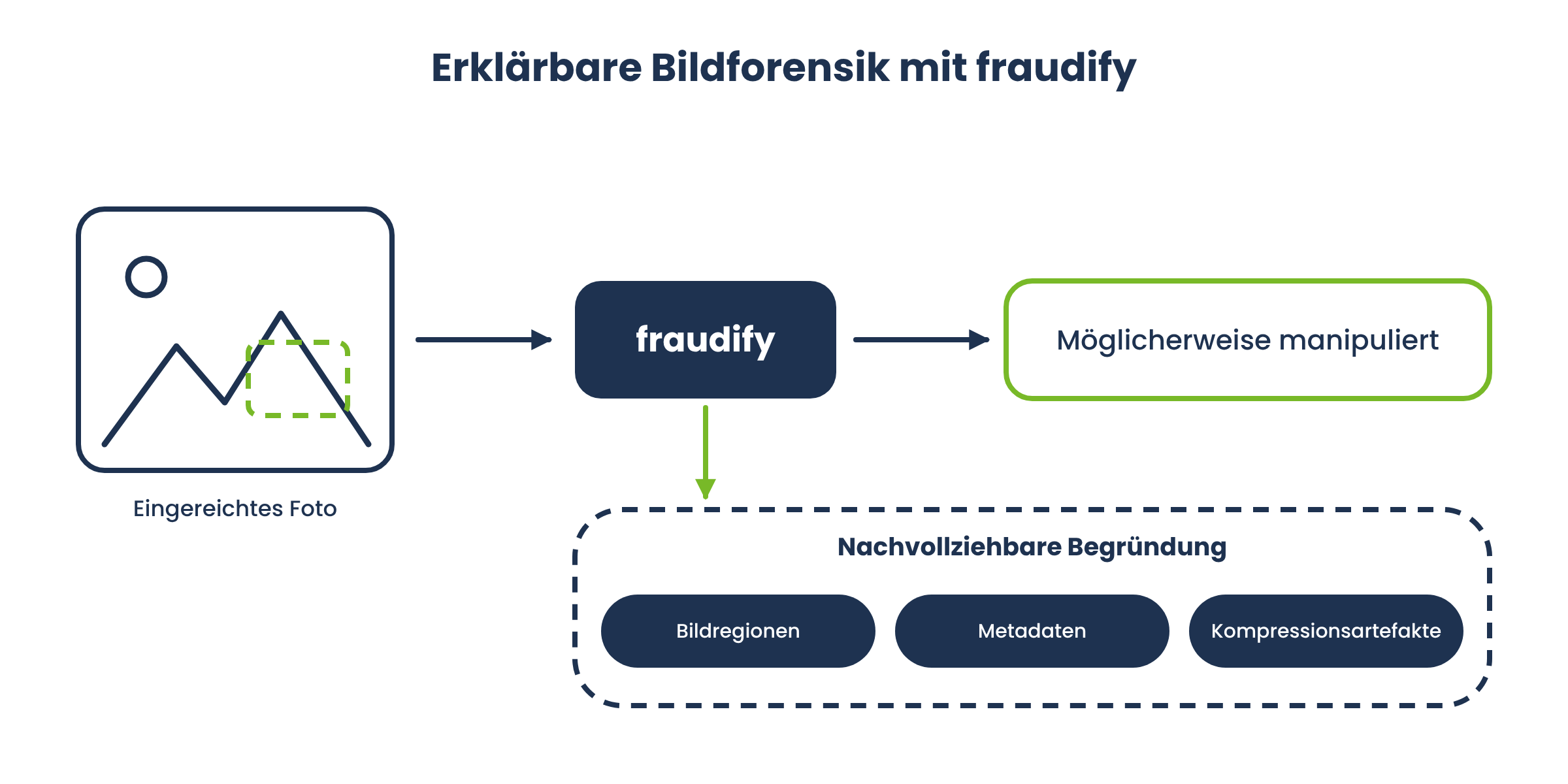
Explainability is also becoming increasingly important in the automated review of images and documents using our image forensics software, fraudify. If fraudify classifies a submitted photo as potentially manipulated, a simple yes-or-no statement is rarely sufficient in practice. Case workers need a transparent explanation—such as which image regions, metadata, or compression artifacts led to this assessment—in order to understand the decision from a technical perspective and justify it to customers. Explainability is a crucial factor here in ensuring that AI-powered image forensics is accepted and used productively in daily practice.
Why is explainability so important in AI systems?
The importance of Explainable AI can be attributed to three key reasons: trust, regulation, and error detection. Each of these aspects directly affects companies as soon as AI models are deployed in business-critical processes.

Reason #1: Building Trust in AI-Driven Decisions
People are more likely to trust decisions when they can understand how they were reached. This applies to interpersonal communication just as much as it does to interacting with technology. An AI system that simply outputs a result without providing a rationale comes across as an oracle—and that undermines acceptance, even if the predictions are objectively correct.
For employees working with AI-powered systems, transparency is actually a prerequisite for meaningful collaboration. Anyone who does not understand an AI recommendation can neither validate it meaningfully nor defend it to customers. Explainable AI provides the necessary foundation here: it transforms a purely predictive tool into a transparent decision-making assistant.
Reason #2: Complying with Legal and Regulatory Requirements
Transparency in AI decisions is no longer just a good idea—in many cases, it is required by law. The European General Data Protection Regulation (GDPR) and the EU AI Act set specific requirements for the traceability of automated decision-making processes. We’ll discuss both sets of regulations in detail below. For companies, this already means today that those using AI systems for high-risk use cases—such as lending, hiring, or medical diagnostics—can hardly do without explainable AI methods.
Reason #3: Detect errors, distortions, and vulnerabilities early on
An AI model can still perform incorrectly even if its accuracy appears high on paper. A classic example: An image classifier is supposed to distinguish between wolves and huskies and reliably identifies “wolf”—until it turns out that it has actually learned to recognize not the animal itself, but the snow in the background as the decisive feature. Without Explainable AI, such misbehavior would hardly have been noticed, since the test results would still have been correct (Ribeiro et al., 2016).
XAI uncovers precisely these kinds of hidden relationships. Explainability methods reveal which features a model actually responds to. This makes vulnerabilities visible before they lead to incorrect or discriminatory decisions in practice.
How do black-box models work—and why are they a problem?
The term “black-box model” describes AI systems whose internal workings are no longer directly comprehensible to humans. This applies primarily to complex architectures such as deep neural networks, ensemble models composed of many decision trees, or large language models.
These models consist of millions or billions of parameters that are automatically adjusted during training. The many nonlinear relationships between these parameters across numerous layers result in highly nested, interdependent calculations. The result is a mathematical construct that, while delivering precise predictions, no longer has individual computational steps that carry intuitive, human-readable meaning.
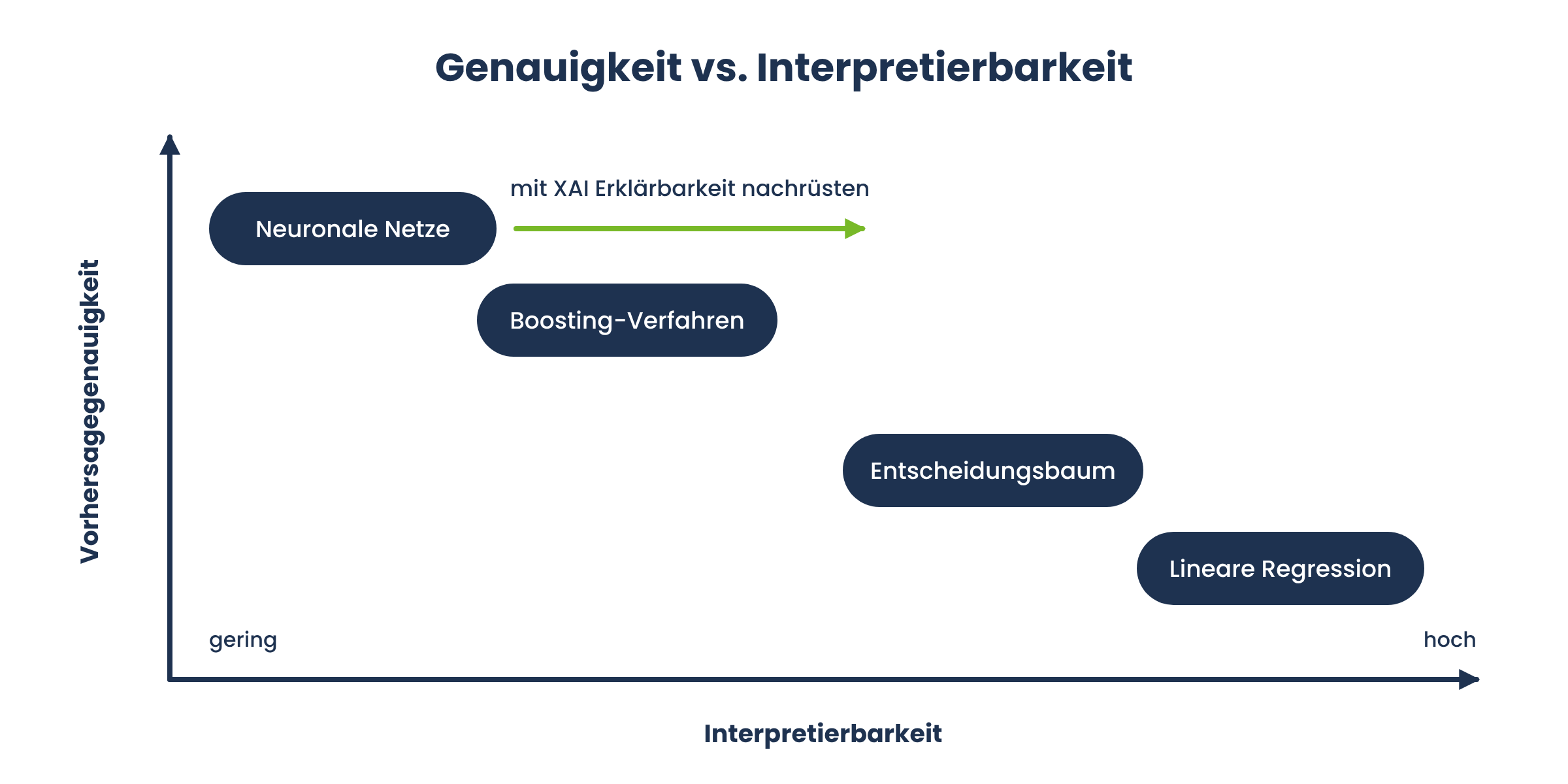
The problem here is that the more powerful a model is, the more complex its structure generally becomes—and the harder it is to explain. This observation leads to a tension that is often described in research as a trade-off between accuracy and interpretability. Simple, inherently understandable models such as linear regressions or small decision trees do provide comprehensible results, but they quickly reach their limits when dealing with complex, high-dimensional problems.
In practice, this means that companies relying on particularly powerful models need additional tools to ensure transparency nonetheless. It is precisely this gap that Explainable AI methods bridge.
Interpretability vs. Explainability: What’s the Difference?
In practice, the terms “interpretability” and “explainability” are often used interchangeably. There is no uniform definition for these terms in the technical literature. However, the following distinction is frequently made:
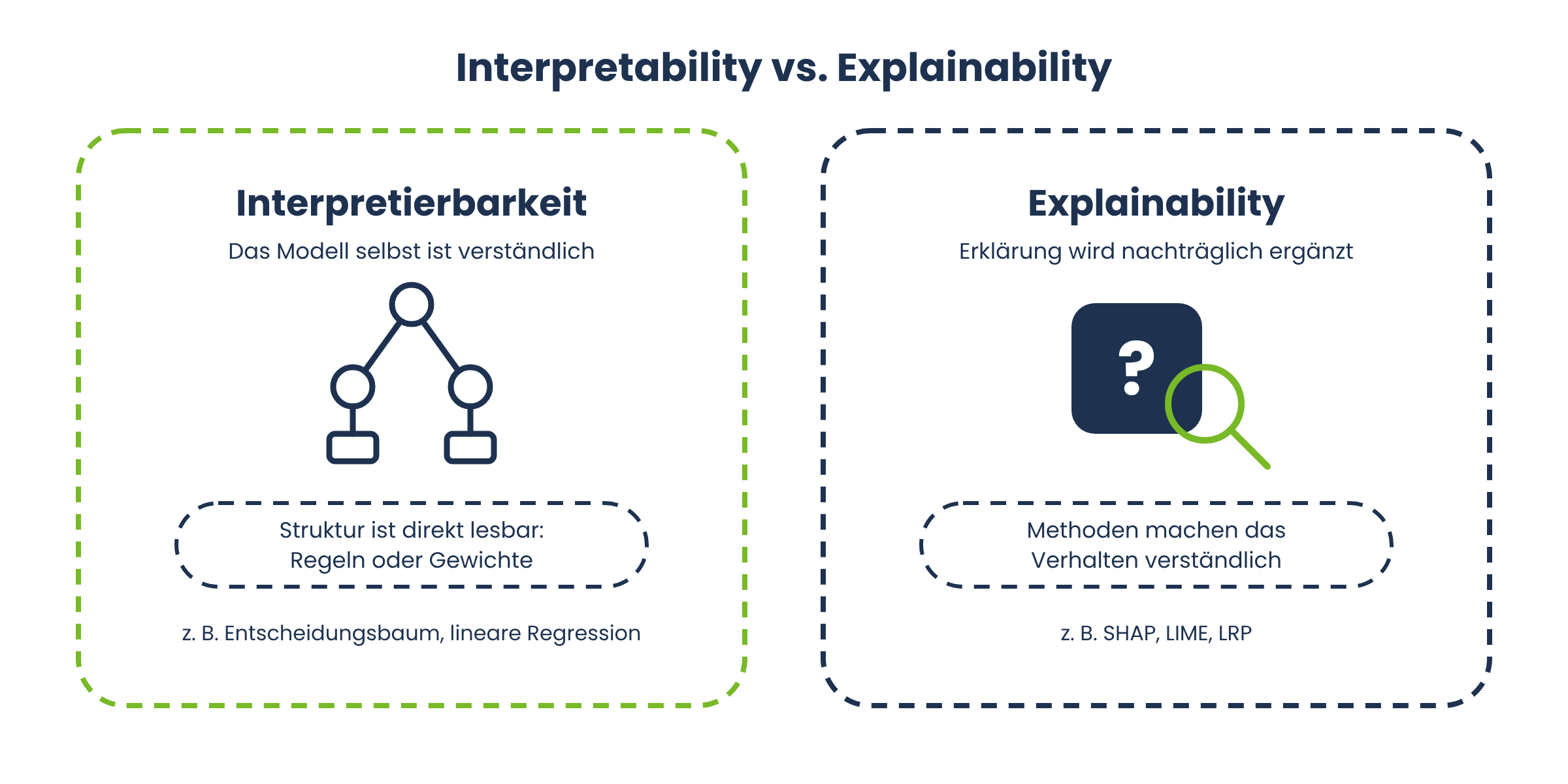
Interpretability refers to the transparency of the model itself: How easy is it to understand how a model arrives at a result based on its inputs? An interpretable model reveals its internal structure—such as the rules of a decision tree or the weights of a linear regression—directly and without additional tools.
Explainability goes a step further and aims at retrospective justification: Using additional methods, a model’s behavior can be made understandable even after the fact, regardless of how transparent its internal structure is. This is particularly relevant for complex models: A neural network for image recognition remains a black box internally, but an explanation method can still show which image regions were decisive for a specific classification.
Even though the terms are used inconsistently, the distinction is more than just academic hair-splitting. It describes two paths to greater transparency: choosing models that are interpretable from the ground up, or using explainability tools to explain more powerful black-box models after the fact. Which approach makes sense for a company depends primarily on the required predictive performance and the available computational resources. Interpretable models are usually faster and cheaper to train and operate, but often do not achieve the same accuracy when dealing with complex relationships. Black-box models such as boosting methods or neural networks can deliver better performance in such cases: Boosting methods are often among the strongest models for tabular data, while neural networks demonstrate their strengths particularly with very large datasets and unstructured data such as images or text. However, they require more computational resources, and the subsequent explanations also entail additional effort.
What types of XAI methods are there?
The landscape of explainable AI methods can be structured based on two criteria: the scope of an explanation (global or local) and the point in time at which explainability is established (from the outset or retrospectively).
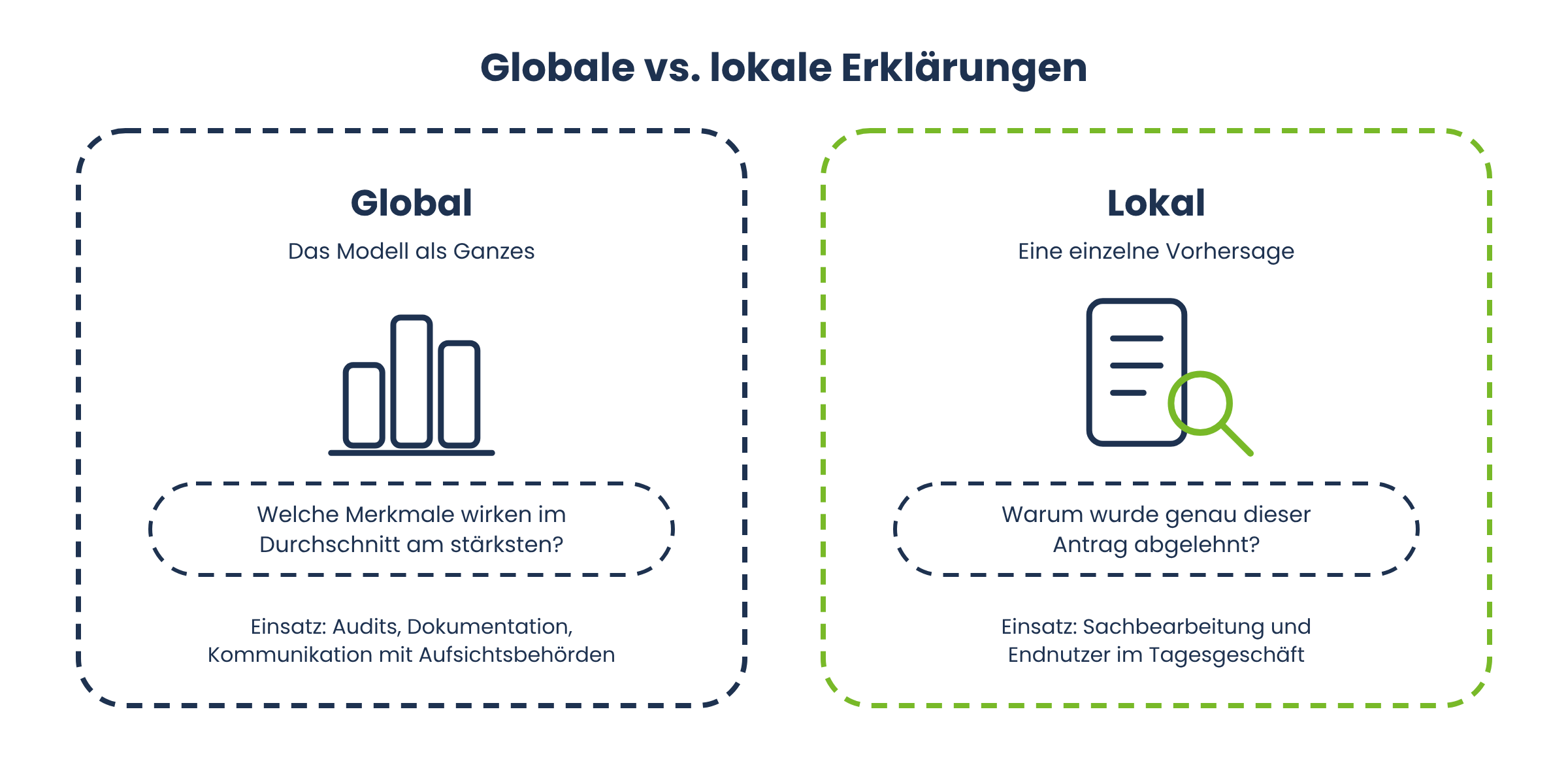
Global vs. Local: Two Perspectives on a Model
Global explanations describe the behavior of a model as a whole. Typical methods include permutation feature importance and partial dependence plots. They answer questions such as: Which features have the strongest average influence on predictions? Are there systematic patterns, such as an excessive weighting of certain demographic features? Are there systematic patterns, such as an excessive weighting of certain demographic features like age or gender? Or do features such as the ZIP code act as proxies for protected characteristics? Global explanations are particularly well-suited for audits, model documentation, and communication with regulatory authorities.
Local explanations, on the other hand, focus on a single prediction. They answer the question: Why was this particular loan application rejected, this specific X-ray image flagged as abnormal, or this particular data record marked as fraudulent? For end users and case workers in day-to-day operations, local explanations are usually more relevant because they relate directly to the specific individual case.
Intrinsically Interpretable Models vs. Post-hoc Explanations
In intrinsically interpretable models, interpretability is firmly built into the model architecture. These include, for example, linear and logistic regressions, small decision trees, or rule-based systems. Their major advantage is that there is no discrepancy between what the model actually calculates and the explanation it outputs—the two are identical.
Post-hoc explanations, on the other hand, come into play after training. They are applied to existing, usually more complex models to make their behavior plausible in retrospect. These include most of the methods presented below—such as SHAP, LIME, and Layerwise Relevance Propagation—as well as widely used approaches like Permutation Feature Importance and Partial Dependence Plots. The advantage lies in flexibility: Post-hoc methods can be applied to nearly any model, regardless of its internal structure. The disadvantage is that the generated explanation is an approximation of the actual model behavior, not the behavior itself.
How does SHAP (Shapley Additive Explanations) work?
SHAP stands for Shapley Additive Explanations and is one of the most widely used methods in Explainable AI. The approach was developed in 2017 by researchers Scott Lundberg and Su-In Lee, who introduced a unified framework for interpreting model predictions (Lundberg & Lee, 2017).
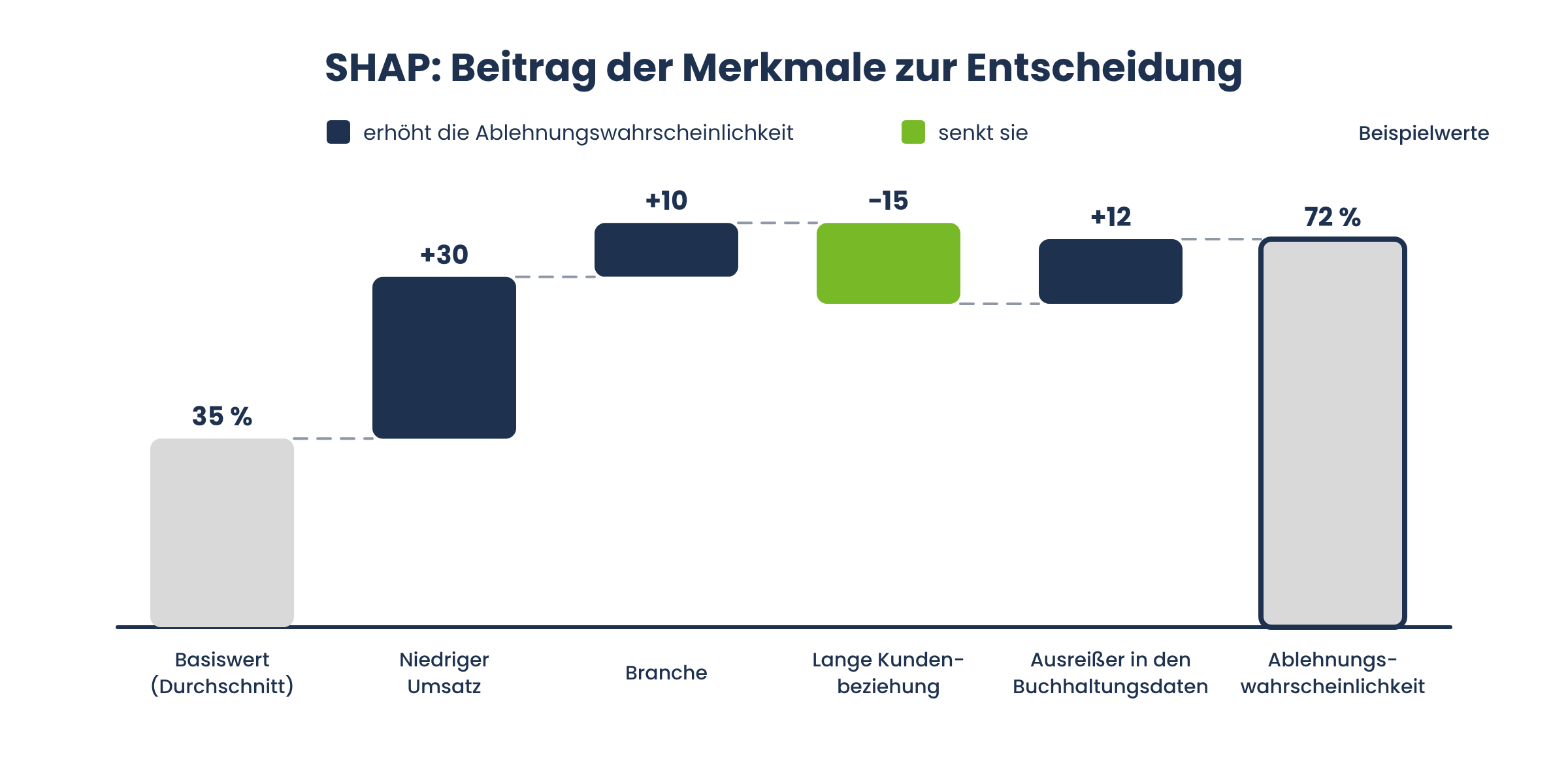
The basic idea behind SHAP stems from game theory and is based on the so-called Shapley value, named after the mathematician Lloyd Shapley. Originally, this concept was used to calculate each player’s “fair share” of a coalition’s total payoff. SHAP applies this principle to machine learning: Each feature in a dataset is treated like a “player,” and SHAP calculates how much that feature contributed to the specific prediction—compared to the average value of all possible feature combinations.
The result is a SHAP score for each feature and prediction. Positive values indicate that a feature shifted the prediction in a certain direction; negative values indicate the opposite. In practice, this allows for a transparent breakdown of the loan application mentioned at the beginning: The low revenue increased the probability of rejection by X percentage points, while the long-standing customer relationship reduced it by Y percentage points.
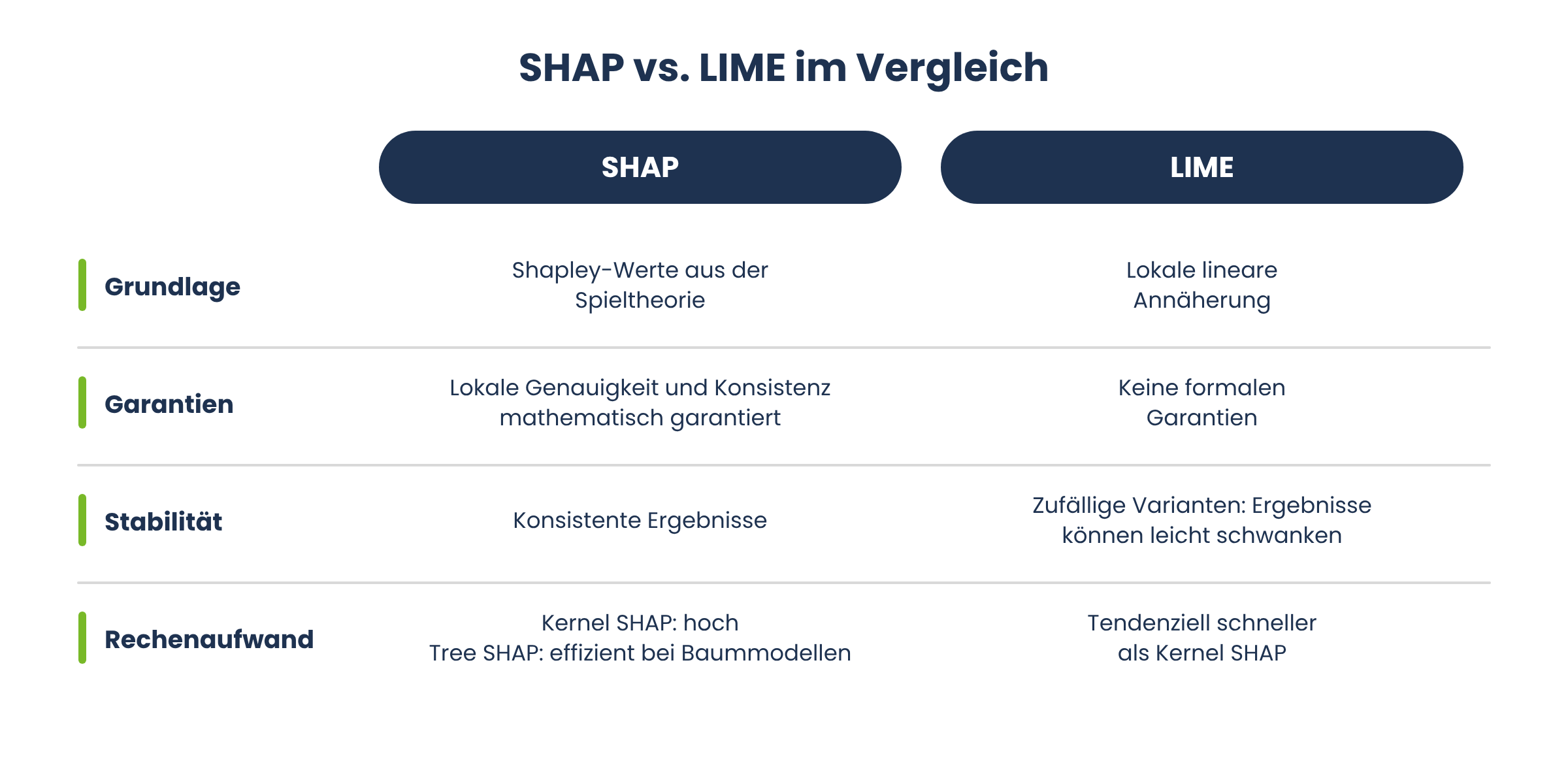
A particular advantage of SHAP lies in its theoretical properties: local accuracy, consistency, and the correct handling of missing values are mathematically guaranteed. This distinguishes SHAP from many older feature importance methods that do not satisfy these properties. The trade-off is computational complexity: An exact calculation of all possible feature combinations is practically unfeasible when there are many features, which is why more efficient methods such as Kernel SHAP or Tree SHAP are used in practice. The latter was developed specifically for tree-based models such as Random Forests or Gradient Boosting.
What is LIME—and how does it differ from SHAP?
LIME stands for Local Interpretable Model-agnostic Explanations and was introduced in 2016 by Marco Tulio Ribeiro, Sameer Singh, and Carlos Guestrin (Ribeiro et al., 2016). As the name suggests, LIME is local (it explains individual predictions), interpretable (the explanation itself is easy to understand), and model-agnostic (it requires only access to the model’s prediction function, not its internal structure).
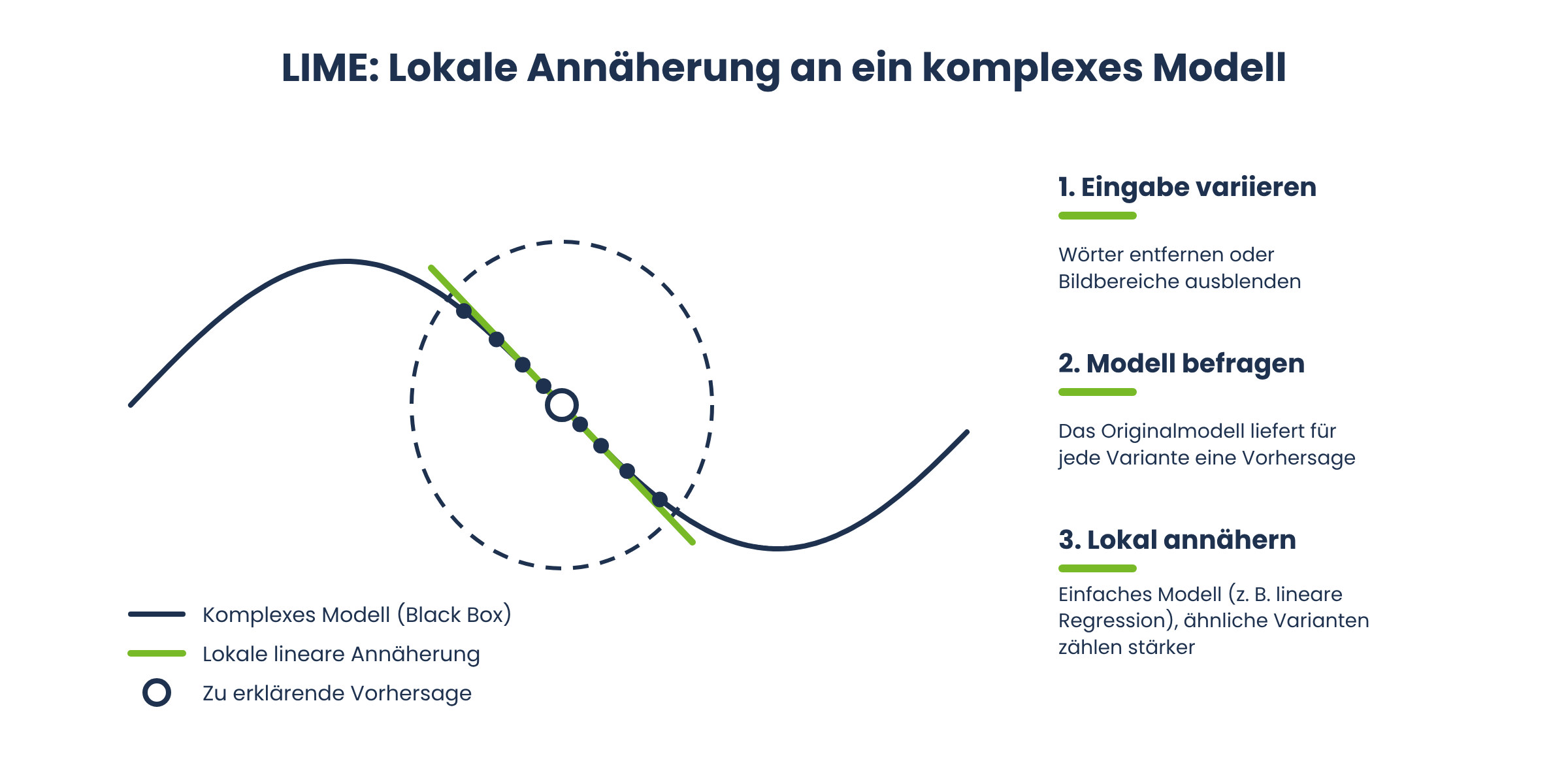
The way LIME works can be explained clearly: To explain a single prediction, LIME first generates slightly modified variants of the original input—for example, by removing individual words from a text or hiding individual areas of an image. For each of these variants, LIME queries the original model for a prediction. A simple, easily interpretable model—usually a linear regression—is then trained on these artificially generated data points. In this process, variants that are more similar to the original input carry greater weight. This simple model approximates the behavior of the complex original model—but only locally, that is, in the immediate vicinity of the prediction being explained.
The key difference from SHAP lies in its theoretical foundation. While SHAP is based on game-theoretic Shapley values and thus guarantees certain consistency properties, LIME uses a local, linear approximation without these formal guarantees. Since LIME generates the input variants randomly, the explanations may also vary slightly from one run to the next. In practice, this means that LIME tends to be faster to compute and more intuitively understandable, while SHAP delivers more consistent and theoretically sound results. However, LIME’s speed advantage applies primarily when compared to the model-agnostic kernel SHAP. For tree-based models, Tree SHAP enables very efficient computation. Many companies therefore use both methods in parallel, depending on the use case.
What are counterfactual explanations?
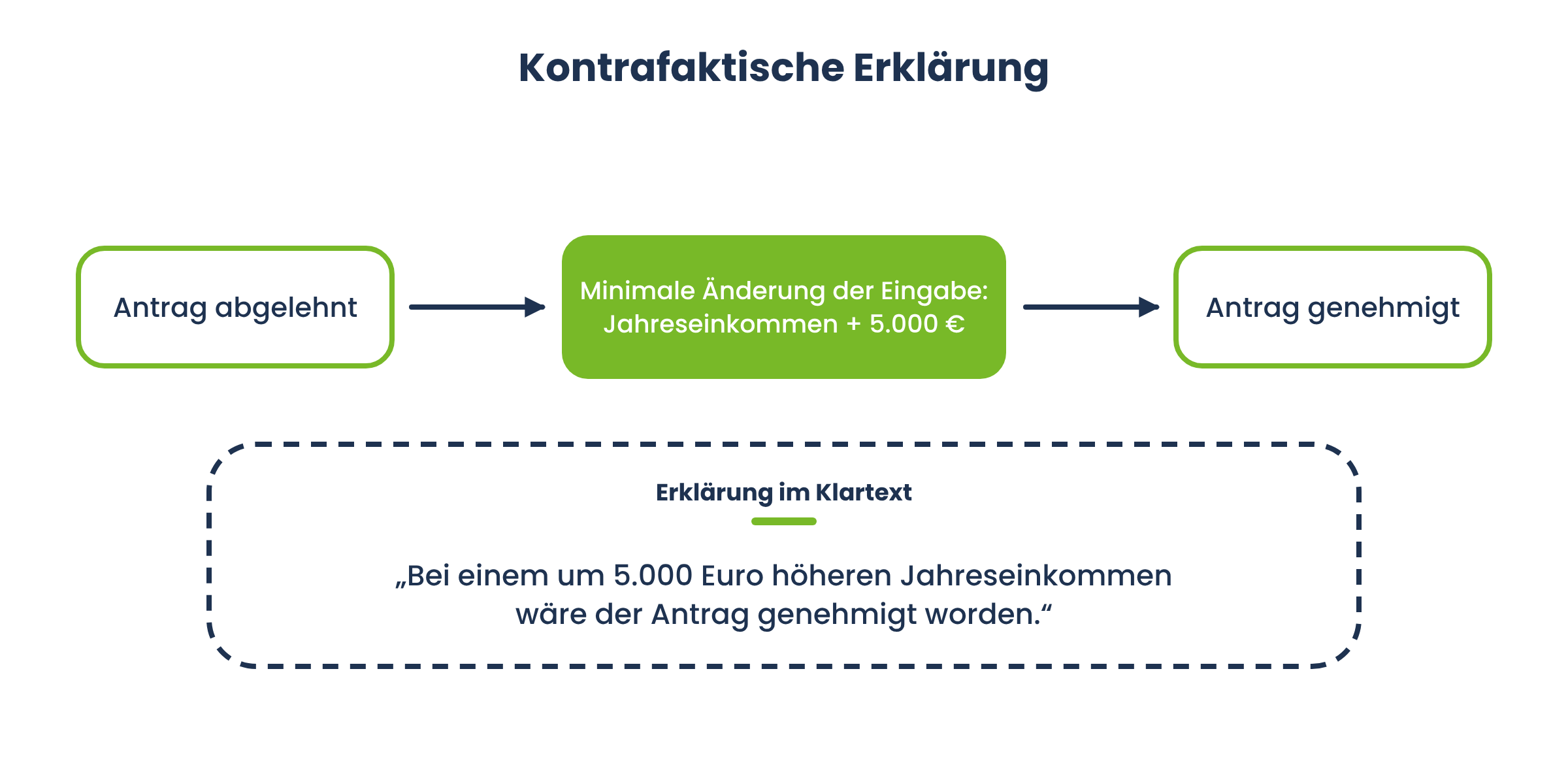
Counterfactual explanations take a different approach than SHAP or LIME: Instead of showing how much individual features contributed to a prediction, they answer the question of what minimal change in the input data would have led to a different result.
An example illustrates the principle: If a loan application was rejected, a counterfactual explanation would provide a statement such as, “If the annual income had been 5,000 euros higher, the application would have been approved.” This form of explanation is particularly valuable because it is not only understandable but, ideally, also actionable: The applicant learns specifically which factor they would need to adjust to achieve a different outcome.
Technically speaking, algorithms for counterfactual explanations search for the nearest data point that would be classified differently by the model than the original one. Typically, the goal is to change as few and as realistic features as possible so that the explanation remains practically actionable. An important limitation: While counterfactual explanations show which change to the input would alter the result, they do not explain why the model reacts in this way or what internal processes underlie its behavior. This question is addressed by causal tracing, which is introduced in the next section.
Counterfactual explanations also have practical relevance in a legal context: The GDPR’s recitals suggest that data subjects have a right to a comprehensible explanation of automated decisions. Counterfactual explanations offer a practical solution because they are understandable without prior technical knowledge.
How does Layer-wise Relevance Propagation (LRP) work?
Layer-wise Relevance Propagation, or LRP for short, was developed in 2015 by Sebastian Bach and his team and is one of the most established methods for explaining neural networks. Originally developed primarily for image classification, it is now also used with other data types such as text (Bach et al., 2015).
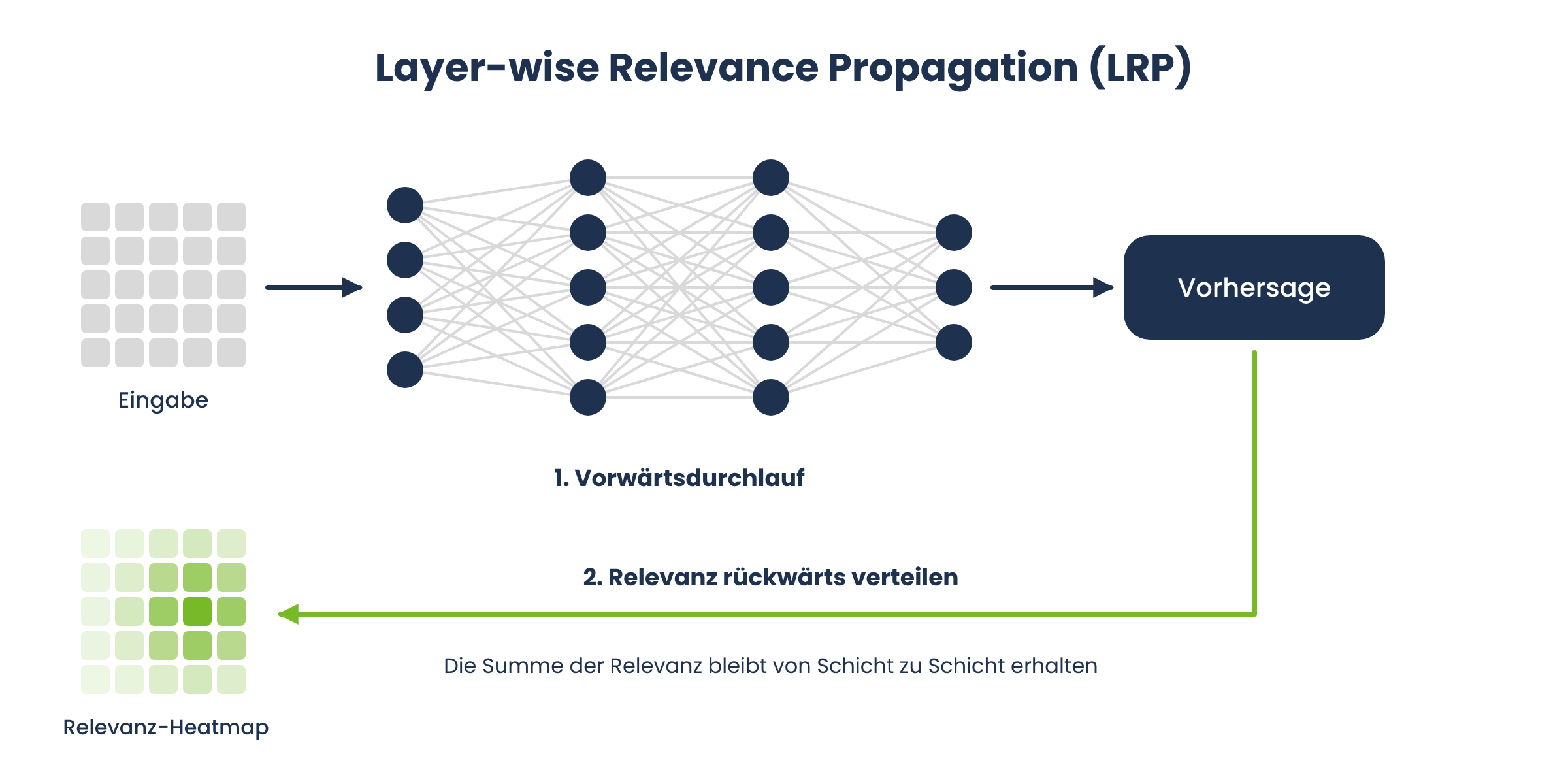
The basic principle of LRP differs significantly from model-agnostic methods such as LIME and Kernel SHAP: Instead of examining the model from the outside and drawing conclusions by perturbing the input data, LRP utilizes the internal structure of the neural network itself. After a normal forward pass, during which the network calculates its prediction, the output value is “backpropagated” layer by layer through the network. In this process, each node receives a relevance value that indicates how strongly it contributed to this output value. This relevance is passed from layer to layer according to fixed rules until, in the end, a relevance value is assigned to each individual input pixel or each individual input feature.
A central principle of LRP is what is known as relevance preservation: The sum of the relevance values remains essentially the same from layer to layer and corresponds to the original output value. The result can be visualized particularly clearly in image classifiers—as a heatmap that shows which image regions most strongly supported or opposed the model’s decision. In medical image analysis, for example, such a heatmap can show which regions of an MRI scan significantly influenced the model’s assessment, enabling physicians to perform an immediate plausibility check.
Compared to simple gradient-based methods, LRP is considered less susceptible to noisy explanations and saturation effects: gradients measure how strongly the output value reacts to small changes in the input, while LRP distributes the output value itself across the input features. However, how well this works in practice depends on the chosen propagation rule. The downside: LRP requires access to the model’s internal architecture and weights and, unlike LIME or Kernel SHAP, cannot be used in a model-agnostic manner.
What is causal tracing—and how does it help us understand AI models?
While SHAP, LIME, and LRP primarily show which input features contribute to a prediction and to what extent, causal tracing has a different objective: By making targeted interventions in a model, it aims to clarify which internal components are causally responsible for a specific model behavior—not just which features are correlated with the prediction.
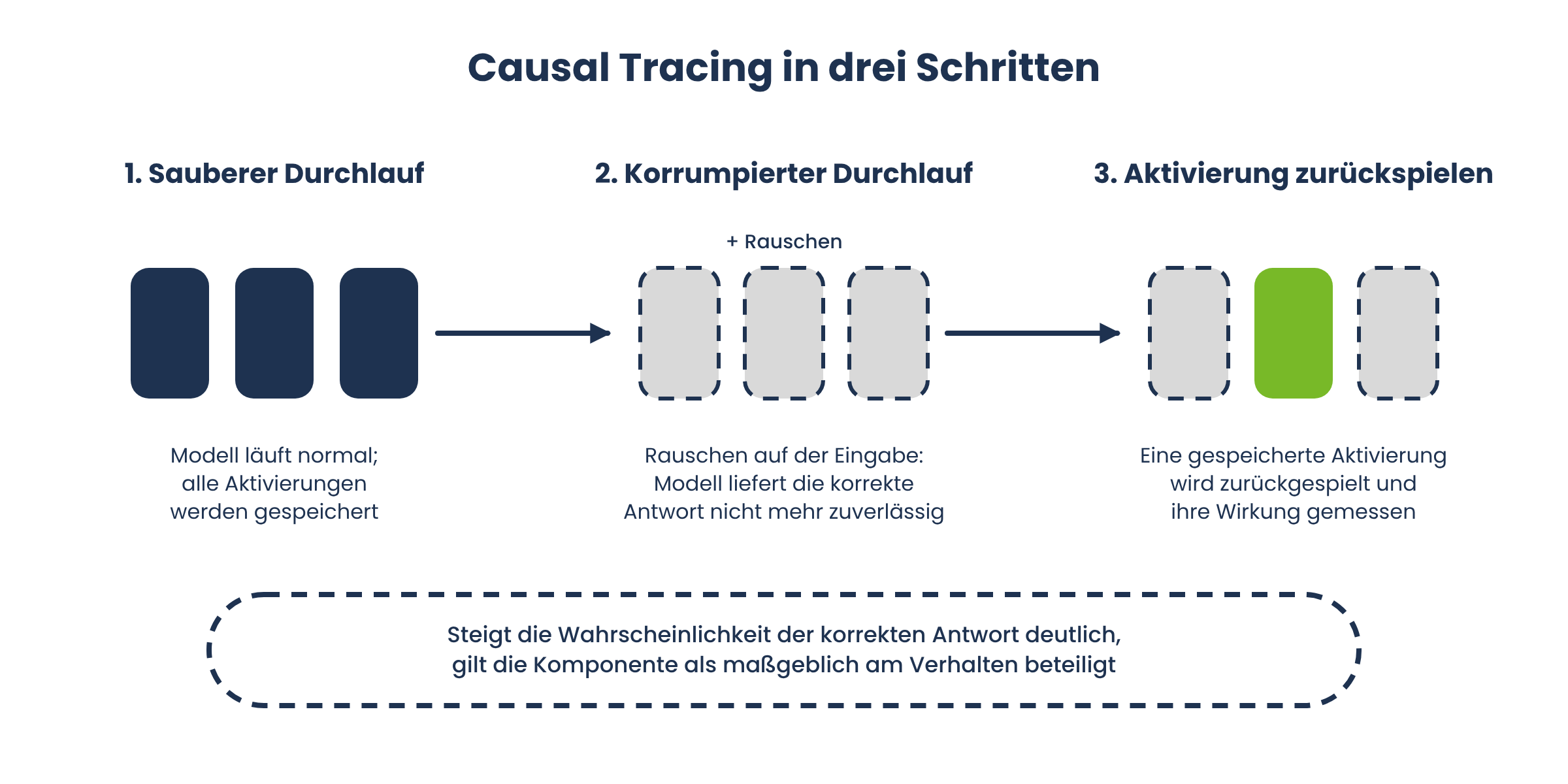
This method became widely known primarily through the research conducted by Kevin Meng and his team on language models (Meng et al., 2022). The process works in three steps: First, a “clean” run is performed with the model, during which all internal activations are recorded. Next, a “corrupted” run is initiated, during which noise is intentionally added to the inputs so that the model can no longer reliably predict the correct answer. In the third step, a single stored activation is fed back from the clean run into the corrupted run. If this significantly increases the probability of a correct prediction, that component is considered to play a key role in the behavior under investigation.
In this way, it is possible, for example, to demonstrate which components of a language model play a key role in retrieving factual knowledge. These findings are not merely of academic interest: they form the basis for methods of targeted model correction, which can be used to adjust the weights of outdated or incorrect facts without having to retrain the entire model. However, these methods are still in the research phase. It is therefore unclear how reliably such changes affect related facts and whether they impair other model capabilities.
For companies that are increasingly integrating language models into their processes, causal tracing is an interesting approach. It reveals which internal components of a model are involved in a specific behavior, thereby going beyond the evaluation of individual input features. It can only be applied to models whose internal activations are accessible—that is, not to models that are used exclusively via an API. Causal tracing is part of what is known as mechanistic interpretability. This field of research is still in the early stages of practical application, but many researchers consider it a promising way to better understand the inner workings of complex models.
Symbolic Regression: Formulas Instead of a Black Box
A fundamentally different approach to Explainable AI does not rely on post-hoc explanation methods, but rather on models that are interpretable from the outset. One example of this is symbolic regression.
Unlike many classical machine learning models, which optimize the parameters of a given model structure, symbolic regression actively searches for a mathematical equation that accurately describes a dataset while remaining as simple as possible. The result is not a multitude of weights in a neural network, but—in the best case—a compact formula that is readable by experts—such as a relationship of the form “default risk increases proportionally to the debt-to-asset ratio and decreases with the duration of the customer relationship.”
The major advantage is obvious: In the best-case scenario, a compact equation can be read and understood directly without the need for additional explanatory methods. In scientific disciplines, symbolic regression has long been used to derive physical relationships from measurement data, which experts then verify. The disadvantage: For very complex, high-dimensional problems, symbolic regression often does not provide the same predictive accuracy as more complex black-box models, because the relationships cannot always be represented in a compact formula. In addition, the search for suitable formulas is computationally intensive and quickly reaches its limits when dealing with many input features.
For companies, this means that whether symbolic regression is a viable option depends first and foremost on the data and the task at hand. It is suitable for manageable, numerical datasets where the relationship can plausibly be represented as a formula—for example, in regulatory-sensitive applications or in research and development. If traceability is also required—for example, in regulated applications—it can be one option among others, such as interpretable models like linear regressions or small decision trees.
What are the legal requirements for explainable AI?
Explainable AI is no longer merely a technical best practice; rather, it is increasingly enshrined in law within the European Union. Two sets of regulations are particularly relevant in this regard: the GDPR and the EU AI Act.
The GDPR and the Right to an Explanation
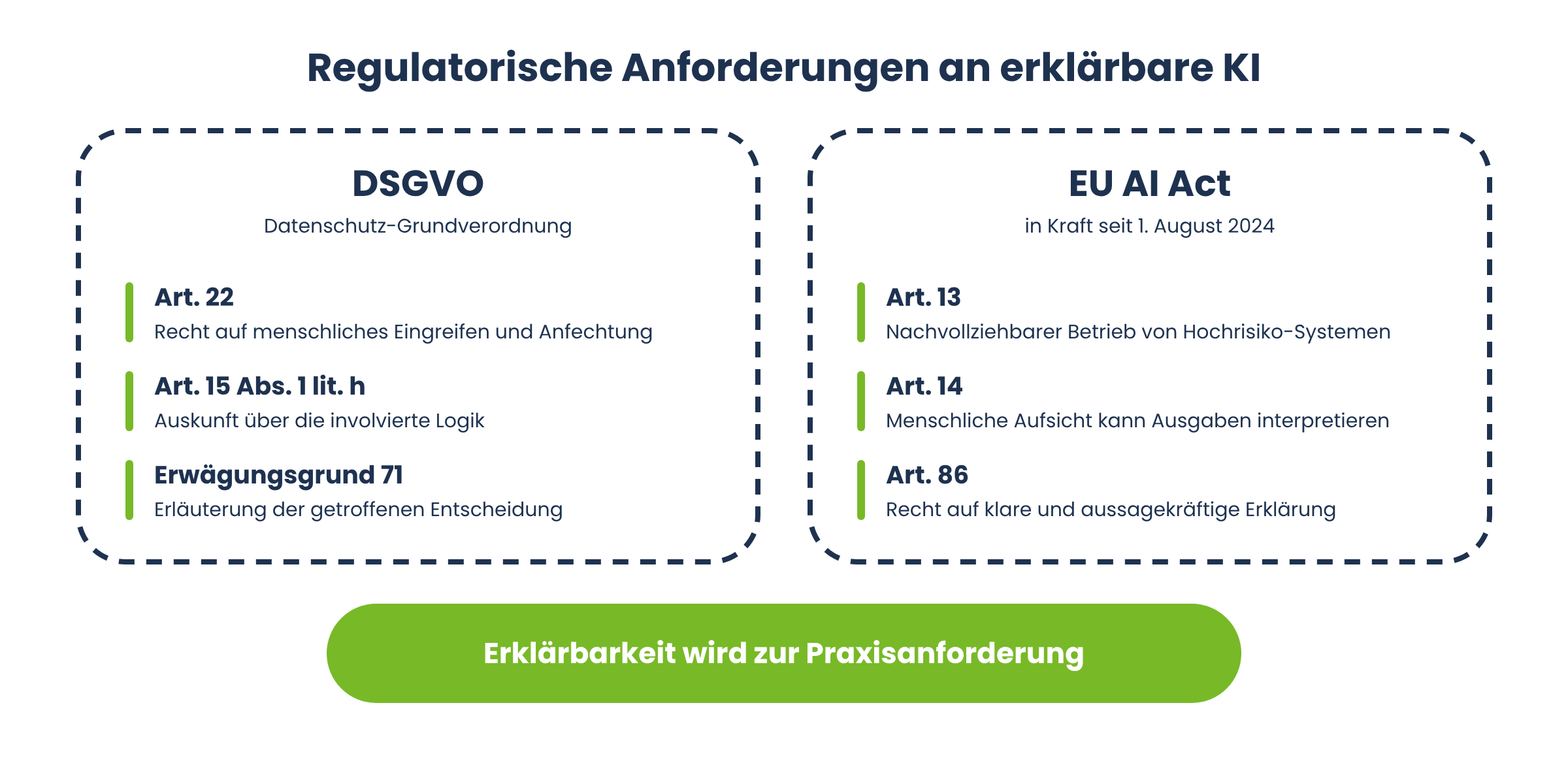
Article 22 of the General Data Protection Regulation governs automated individual decision-making, including profiling. In principle, data subjects have the right not to be subject exclusively to automated processing. This applies when such processing produces legal effects concerning them or similarly significantly affects them (GDPR, Art. 22). Where automated decisions are nevertheless permitted—for example, based on explicit consent—Article 22(3) stipulates that companies must take appropriate measures to protect the data subject’s rights, including, at a minimum, the right to human intervention, to express their point of view, and to contest the decision.
Whether the GDPR thereby establishes an explicit “right to an explanation” is a matter of debate in legal scholarship. An explicit term of this kind does not appear in the binding text of the law, but it does appear in Recital 71, which suggests that data subjects should receive an explanation of the decision made. Another relevant provision is the right of access, which includes meaningful information about the logic involved (Art. 15(1)(h)). In practice, this combination of rights to access, rights to object, and the right to human intervention means that companies effectively need explainable AI systems to operate in compliance with the GDPR.
The EU AI Act and Its Transparency Requirements
The EU AI Act, which entered into force on August 1, 2024, and whose requirements have been phased in since then, is significantly more specific. Article 13 mandates transparency for so-called high-risk AI systems, such as those used in creditworthiness assessments, personnel selection, or critical infrastructure. These systems must be designed in such a way that their operation is sufficiently traceable. This is intended to enable operators to appropriately interpret and utilize the system’s outputs (EU AI Act, Key Topic: Transparency Requirements).
Specifically, the EU AI Act requires, among other things, comprehensible operating manuals that document the system’s capabilities and limitations, as well as mechanisms that enable effective human oversight. Article 14 further stipulates that individuals overseeing a high-risk system must be able to correctly interpret its outputs. This requirement can hardly be met in practice without suitable explainable AI tools. In addition, Article 86 will grant data subjects the right to a clear and meaningful explanation in the future if a decision made by a high-risk AI system has a significant impact on their lives. Although this provision will not fully take effect until later, it points to the direction in which European AI regulation is heading: toward an explicit right to an explanation.
For companies, this results in a clear recommendation for action: Anyone developing or deploying AI systems for high-risk use cases today should not wait until just before additional obligations take effect to retrofit explainable AI methods. It is better to plan for explainability from the very beginning—both in model selection and in system architecture.
How does XAI help identify bias in AI models?
Bias often arises unnoticed. One reason is that training data always comes from the past and thus reflects historical inequalities. For example, if women have been less likely to hold leadership positions or receive loans, a model may learn this pattern as a supposedly valid rule. In addition, many datasets originate predominantly from Western countries, meaning that other demographic groups and regions are underrepresented. A model trained on such data can adopt these biases and systematically reinforce them without this being apparent from the pure accuracy rate.
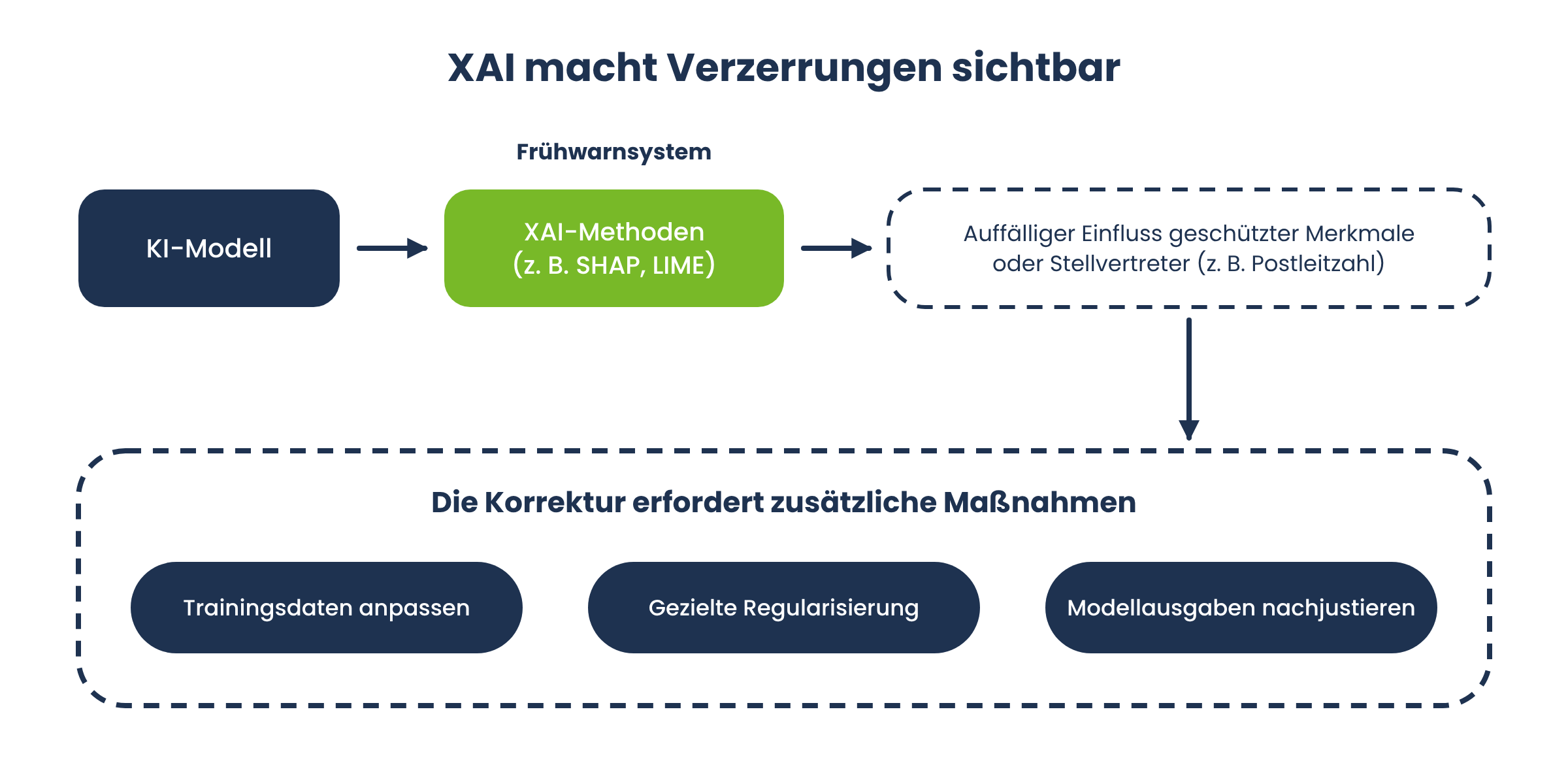
Explainable AI plays a central role in uncovering such biases. By using methods such as SHAP or LIME to reveal which features actually influence a prediction, it is possible to verify whether protected characteristics such as gender, origin, or age—or closely correlated proxy features such as ZIP code or first name—have a disproportionately high influence on decisions. Explanations thus serve as a kind of early warning system that reveals patterns hidden in aggregated accuracy metrics.
In practice, companies often combine local explanations of individual predictions with global analyses across larger datasets. This allows them not only to examine individual cases but also to systematically investigate whether certain groups are, on average, rated more poorly than others. However, it is important to note one limitation: explainability alone does not eliminate bias. It makes bias visible—the actual correction requires additional measures such as adjusting the training data, targeted regularization, or fine-tuning the model outputs. If bias cannot be sufficiently remedied in this way, it may make more sense to refrain from using the model for this particular use case.
What challenges does Explainable AI present?
As valuable as Explainable AI is, it also presents its own challenges that companies should consider when implementing it.
The Trade-off Between Accuracy and Transparency
As already described in the section on black-box models, accuracy and interpretability are often at odds with one another. The most powerful models are often the hardest to explain, while particularly transparent models sometimes reach their limits when dealing with complex relationships. Companies must therefore carefully weigh what level of explainability is necessary for each specific use case—and what trade-off in accuracy or computational effort they are willing to accept in return.
When Explanations Themselves Become Vulnerable: Adversarial Attacks on XAI
A lesser-known but growing challenge concerns the robustness of explanation methods themselves. Research shows that explanations can be deliberately manipulated without changing the underlying model prediction. For example, an image can be altered minimally—in a way barely perceptible to the human eye—so that an explanation method suddenly flags completely different, misleading image regions as critical (review article on adversarial attacks on XAI). When explanations are deliberately used to mask actual biases in a model, this is referred to in the literature as “fairwashing.”
This insight puts a common misconception into perspective: An explanation is not irrefutable proof of a model’s trustworthiness, but rather a tool in its own right that must be carefully validated. Companies that use XAI methods in areas where targeted attacks are to be expected should therefore also keep an eye on the robustness of the explanation methods themselves—for example, in the fields of fraud detection or cybersecurity, where attackers may have a direct interest in deliberately manipulating explanations.
Explanations that end users do not understand
A third challenge is more human than technical in nature: Many explanatory methods produce results that, while mathematically sound, are not very intuitive for laypeople. A list of SHAP scores or a heatmap full of color gradients may be helpful to a data scientist, but it tends to overwhelm end users rather than enlighten them. Explainability is therefore not merely a technical problem, but also a matter of clear communication. Anyone using XAI in customer interactions should translate technical explanations into language appropriate for the respective target audience—for example, by using counterfactual explanations in plain language rather than abstract numerical values.
Best Practices: How Companies Successfully Implement Explainable AI
The implementation of Explainable AI rarely succeeds as a purely IT project. Instead, it requires a structured approach that takes technical, organizational, and communicative aspects into account in equal measure.
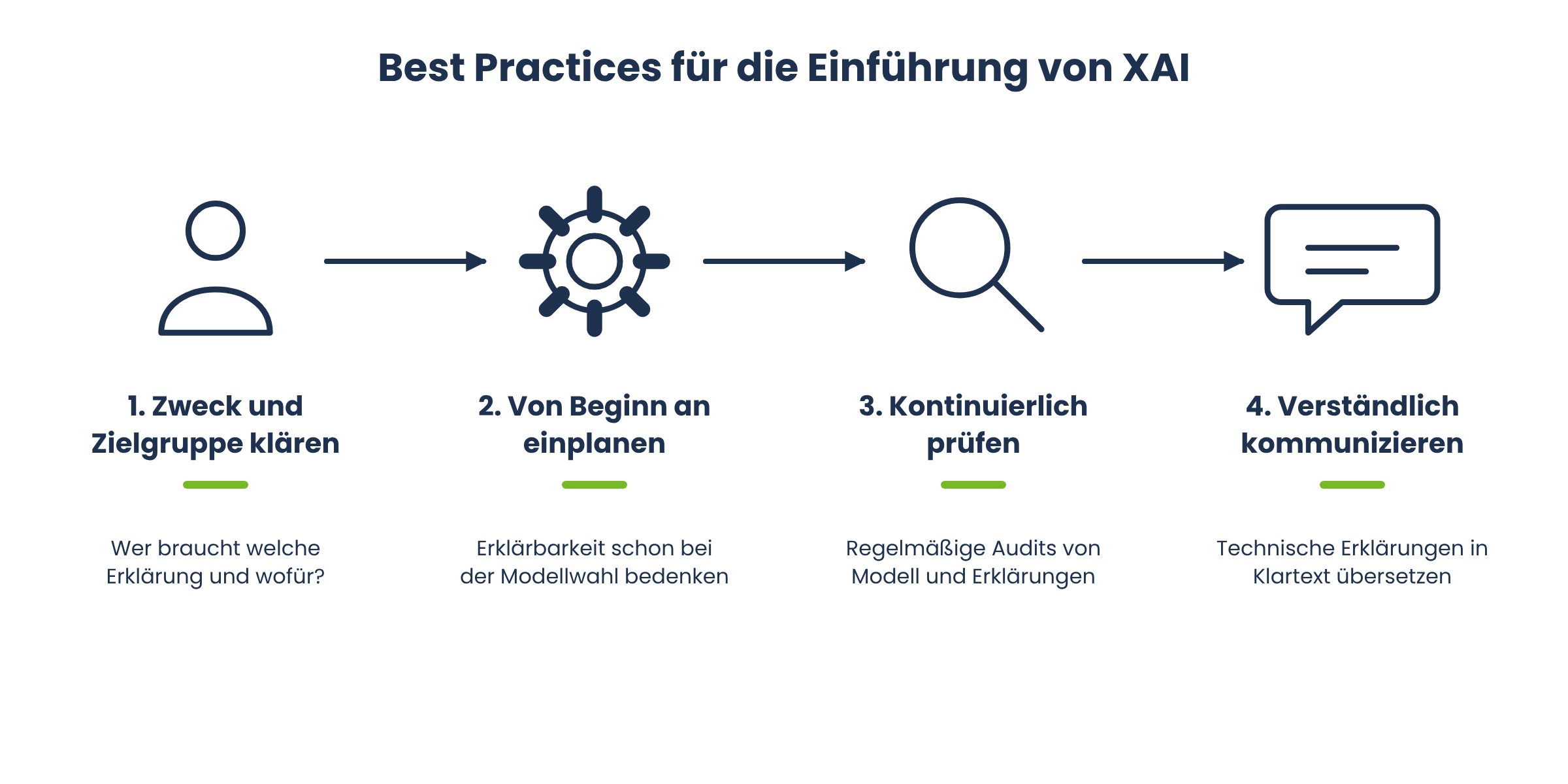
The first step is to define the purpose: Who should receive an explanation, and why is it needed? A data scientist investigating the causes of a model’s incorrect predictions needs different information than a customer who wants to understand why a loan application was denied, or a regulatory agency reviewing a system as part of an audit. These different target audiences require different forms of explanations—ranging from detailed technical reports to simple, understandable sentences.
It also makes sense to consider Explainable AI from the very beginning of a project, rather than waiting until the end. If the choice of model is made from the outset with explainability in mind, subsequent revisions can be avoided. In some use cases, an intrinsically interpretable model with slightly lower accuracy is the better choice than a black-box model that must be made interpretable later through a labor-intensive process.
Equally important is continuous monitoring: explainability is not a one-time task to be checked off a list, but an ongoing process. Models are retrained regularly, data distributions change, and with them, potentially, the relevance of individual features. Regular audits that examine both model performance and the quality and robustness of the explanations should therefore be firmly embedded in operations.
Finally, it’s worth investing in clear communication. Even the best technical explanation is of little use if it does not reach its target audience. Companies that successfully deploy Explainable AI consistently translate technical explanations into language that is understandable to the respective users—whether they are customers, staff members, or regulatory authorities.
What role do data scientists and machine learning engineers play in XAI?
Explainable AI is not a task that can be solved through technical means alone—it requires close collaboration among different roles. Data scientists and machine learning engineers bear primary responsibility for the technical implementation: They select appropriate models, implement explanation methods such as SHAP or LIME, and validate whether the generated explanations reflect the actual model behavior.
This task goes beyond mere programming. Data scientists translate the domain-specific context into a machine learning problem and develop the model: they select suitable models, train them, and optimize them. They then analyze the model, which is where explanation methods like SHAP or LIME come into play. They verify whether the explanations reflect the actual model behavior and contextualize them within the relevant domain, such as finance or medicine. In addition, they translate the technical results back into terms understandable to people without a technical background, such as business departments or regulatory agencies.
Machine learning engineers are responsible for implementing the model and the explanation methods, as well as for ongoing operations. They must weigh the computational overhead that explanations impose in production environments and determine how they can be integrated into existing systems without noticeably slowing down operations. During ongoing operations, they monitor not only the model but also the quality and robustness of the explanations. In addition, they check the quality of new data, detect data drift, and, if necessary, retrain the model and perform additional tuning. Furthermore, they ensure that users have access to the model and its explanations.
Since the areas of responsibility overlap, interdisciplinary teams that combine the perspectives of both roles are beneficial. As a result, many companies are increasingly forming such teams, which bring together technical expertise, domain knowledge, and regulatory understanding to effectively embed Explainable AI into their operations.
Explainable AI as the Foundation for Trustworthy Decisions
Explainable AI is no longer a niche topic, but rather a central component of the responsible use of artificial intelligence in businesses. Whether in lending, medical diagnostics, or fraud detection: wherever AI models make decisions with real-world consequences, there is a growing need to make these decisions transparent.
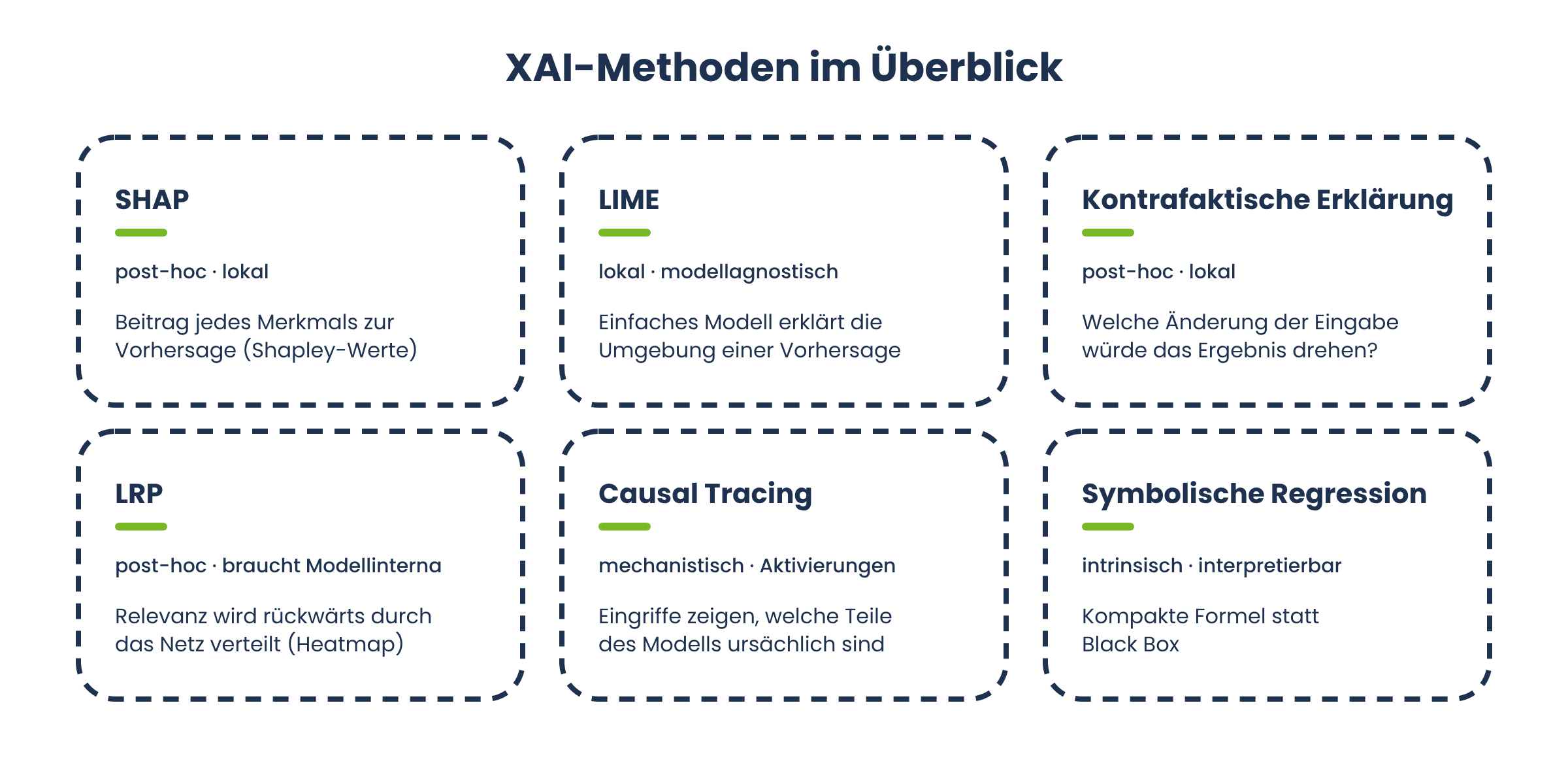
The methods presented—ranging from SHAP to LIME and counterfactual explanations to layer-wise relevance propagation and causal tracing—show that there are suitable tools for nearly every use case. It is important to select the appropriate method for the specific goal, to understand its limitations, and to view explainability as an ongoing process rather than a one-time technical measure.
Furthermore, with the GDPR and the EU AI Act, the regulatory framework is becoming increasingly stringent. Companies that invest in explainable AI systems today not only ensure legal compliance but also build the foundation of trust necessary for broad acceptance of AI-driven decisions.
Are you looking for support in implementing an explainable AI model, or are you searching for the right training? We’ll help you implement AI systems in your company!
Frequently Asked Questions About Explainable AI (FAQ)
"Explainable AI" refers to methods that make it possible to understand how and why an AI model arrived at a particular decision or prediction. Instead of simply outputting a result, it also provides an explanation—for example, which factors carried the most weight.
These terms are not used consistently. Often, interpretability refers to how transparent a model’s structure is. Explainability refers to how well a model’s decisions can be explained—even retrospectively, using additional methods—regardless of how transparent the model’s structure is.
There is no single “best” method. SHAP theoretically provides more robust and consistent results, but the model-agnostic version is more computationally intensive. LIME is faster and more intuitive, but it offers no formal guarantees of consistency, and its explanations can vary slightly from one run to the next. Many companies use both methods in tandem, depending on the specific use case.
XAI is rarely explicitly mandated as a standalone requirement. Indirectly, however, the need arises from both Article 22 of the GDPR and the transparency and oversight obligations under the EU AI Act for high-risk AI systems. Anyone who wants to meet these requirements in practice needs models that are transparent. This can be achieved either with models that are interpretable from the outset—such as linear regressions or smaller decision trees—or, for more complex models, with additional explainable AI methods.
Deep learning models consist of many layers and millions to billions of parameters that are automatically adjusted during training. The numerous nonlinear relationships between these parameters result in nested calculations in which individual weights no longer have any meaning that is readable to humans. While this high level of complexity enables precise predictions, it also makes the internal logic no longer directly comprehensible—unlike in simple, inherently interpretable models such as linear regressions.
No. Explainable AI does not prevent bias, but it can help identify it by showing which features influence a prediction. Actually eliminating bias requires additional measures, such as adjusting the training data or making targeted fairness corrections within the model itself.
Transparent explanations are essential for people to trust AI-driven decisions. Those who understand why a model arrived at a particular result can better contextualize that result, critically evaluate it, and, if necessary, challenge it—which strengthens the acceptance of AI systems among both employees and customers.
Not necessarily. Post hoc explanatory methods provide approximations of the actual model behavior, not absolute truth. Research also shows that explanations can be deliberately manipulated without altering the underlying prediction. Explanations should therefore always be critically examined and should not be uncritically accepted as proof of a model’s reliability.


