
Identifying AI-Generated Damage Photos: How Insurers Expose Deepfakes in Claims Management
A short text prompt, a few seconds of processing time—and an undamaged fender becomes a total loss. What used to require image-editing expertise and a lot of time is now handled effortlessly by freely available AI tools. For claims departments, this is no longer a distant prospect. Industry media outlets also emphasize : Manipulated damage photos are nothing new—what is new is how easy it is to use manipulation tools today.
The Silent Threat: AI-Fabricated Damage Patterns
The data is clear: The problem is growing, and the industry is aware of it.
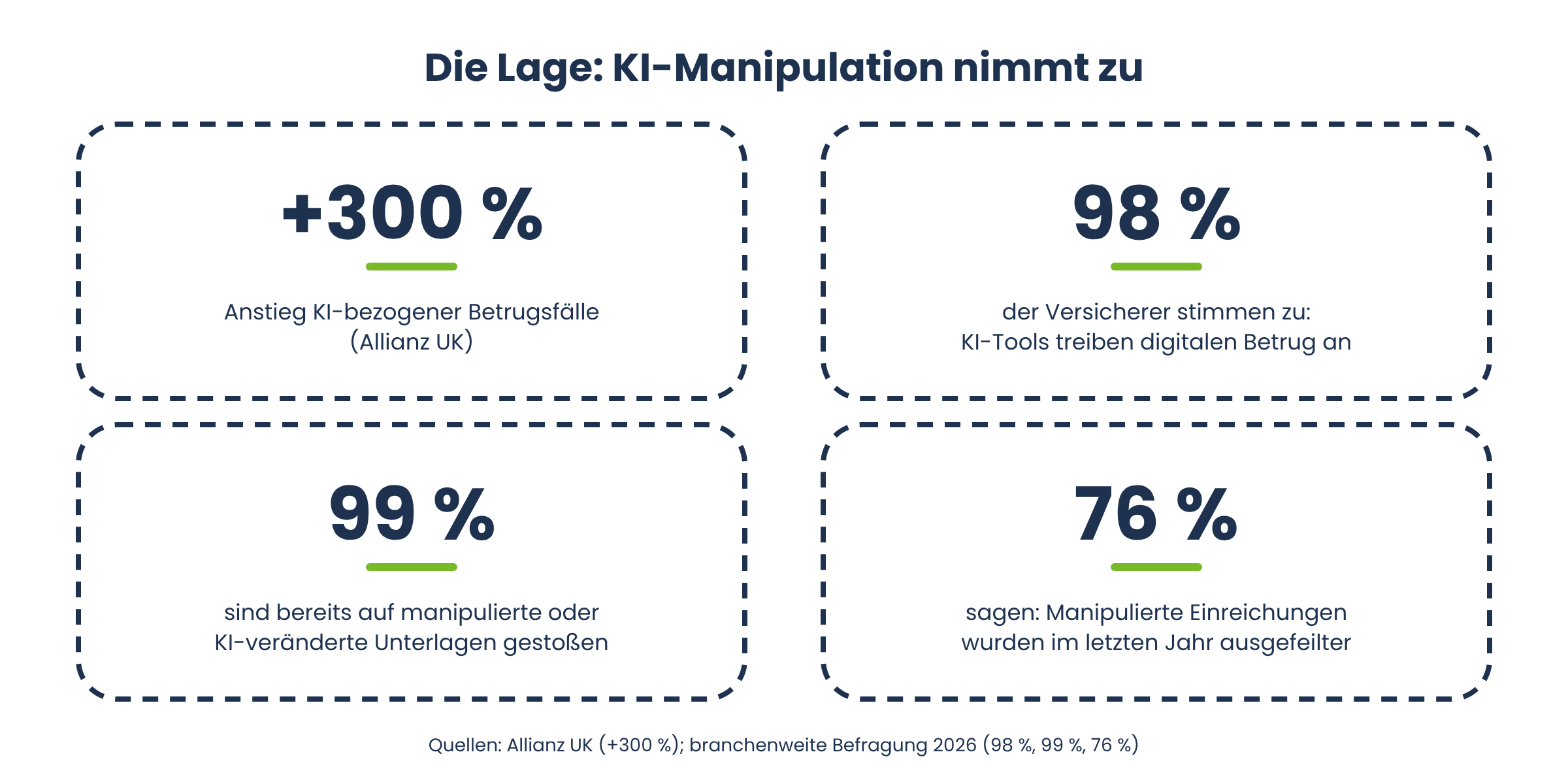
Rise in the UK: Allianz UK reported a 300 percent increase in AI-related fraud cases. Insurers refer to these as “shallowfakes”—photos that are altered using simple AI tools to make damage appear more severe or as if it had just occurred.
Industry-Wide Survey 2026: In a study , 98 percent of insurers agreed that AI editing tools are driving digital fraud; 99 percent have already encountered manipulated or AI-altered documents.
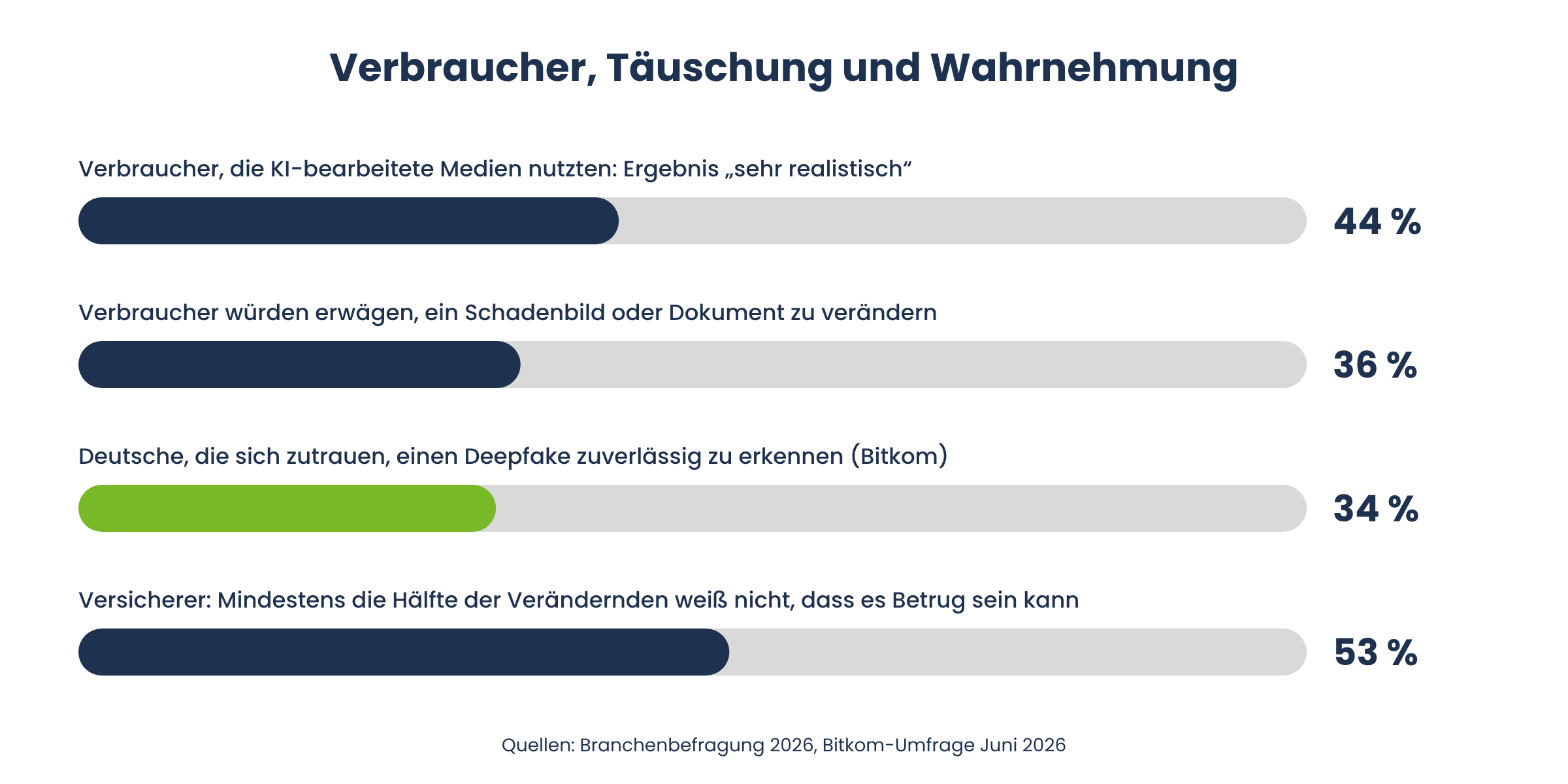
Increasingly Sophisticated: 76 percent of insurers say that manipulated claims submissions have become more sophisticated over the past year. Among consumers who have used AI tools to edit photos, videos, or documents, 44 percent describe the result as “very realistic.”
Low threshold: 36 percent of consumers surveyed would consider digitally altering a claim image or document —even if it violates the insurer’s rules.
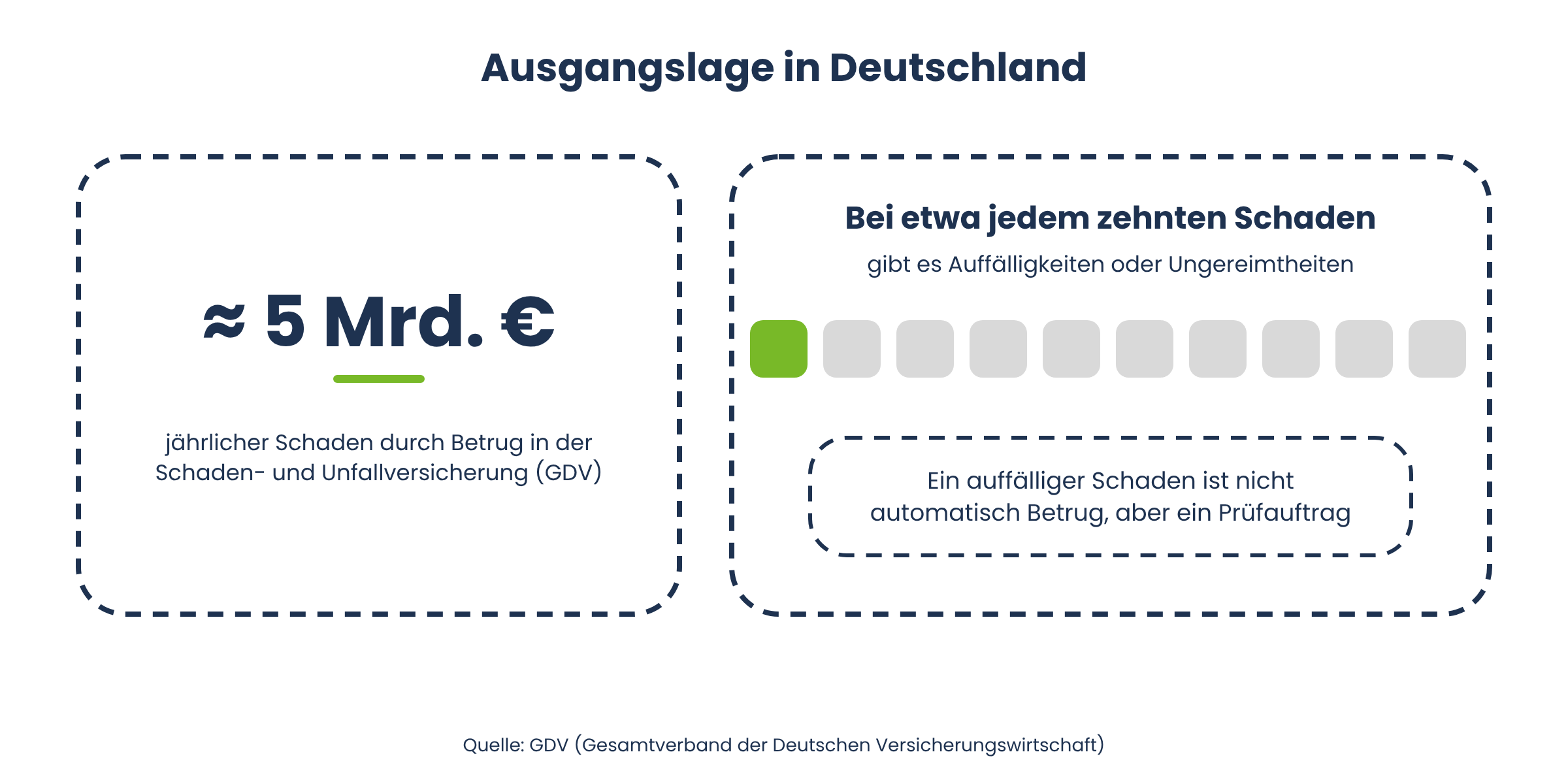
Current situation in Germany: The GDV estimates the annual losses from insurance fraud in property and casualty insurance at around five billion euros; approximately one in ten claims contains anomalies or inconsistencies.
The human eye is overwhelmed: According to a Bitkom survey from June 2026, only 34 percent of Germans believe they can reliably detect a deepfake.
Why aren't traditional checks enough anymore?
In many companies, image verification is a two-step process: Claims adjusters take a quick look at uploaded photos, and specialists examine them more closely in cases involving large claims. This worked as long as forgeries could be identified by traces of cloned stamps and rough edges. Today, this model falls short in three areas:
Quality: Generative models produce high-resolution images with consistent lighting. Conspicuous artifacts that catch the eye are becoming less common.
Volume: Digital claims reporting means thousands of uploads per week. Not every image can be checked manually.
Thresholds: A thorough review is often only conducted once the claim amount reaches a certain threshold. This is precisely what creates a blind spot for small and medium-sized claims. Stephen Voss of Neodigital has already warned that criminals could submit many smaller claims that fall below the threshold of detection.
How is a doctored damage photo created?
If you understand the process of forgery, you can set the right checkpoints along the way. Typically, it unfolds in three phases:
1. Creation or manipulation. The starting point is usually a genuine photo into which dents, scratches, shattered glass, or water stains are inserted using AI inpainting or generative filling. Alternatively, the image is created entirely synthetically. Common techniques include copy-paste manipulations, retouching, combining multiple image sources, and content generated entirely by AI.
2. Concealment. The image is then post-processed: resolution and image noise are adjusted, lighting is balanced, and metadata is deleted or altered. Some perpetrators photograph the finished image from the screen to cover their tracks.
3. Submission and Reuse. The image is submitted—and is often reused multiple times: in different claims, under different names, or with multiple insurers. If the first claim is settled quickly, the temptation to reuse the same image increases.
Pain Points in the Claims Process
Customers expect fast, digital decisions—often within hours. Fraud networks exploit precisely this speed. At the same time, the claims review process must not slow down honest policyholders or place them under general suspicion. This can only be achieved with two capabilities:
Automated triage: Every incoming image is evaluated; only suspicious cases are sent for manual review.
Transparent Results: Reviewers can see why an image stands out—and can address the issue with customers in a factual manner.
Communication is also key: 53 percent of insurers suspect that at least half of the policyholders who alter claim documentation are unaware that this could constitute fraud. Clear guidance during the reporting process therefore serves as a preventive measure.
5 Steps to Identifying AI-Generated Damage Photos
Step 1: Automatic image verification upon receipt.
Each photo is forensically analyzed upon upload—for irregularities in light, shadows, and textures; unnatural details; and deviations in resolution, noise patterns, and image composition. Suspicious images are placed in a review queue rather than blocking the process.
Step 2: Metadata analysis.
Timestamps, camera data, software information, and geodata are cross-checked against the details in the damage report. Missing or contradictory fields trigger an in-depth review.
Step 3: Duplicate check across claims.
Detects whether an image—even if cropped, scaled, or in a different format—has already been submitted in a previous case. Learn more in our article “Finding Duplicate Images with fraudify.”
Step 4: Reverse image search on the internet.
Fraudsters often use images that are already circulating: stock photos, press photos, and images from social media. An automated reverse image search reveals whether a photo already exists elsewhere.
Step 5: Explainable results, configurable rules, and human decision-making.
The technology provides an assessment along with a rationale; a defined set of rules determines when an issue should be escalated. The final decision remains with a human.
Here’s how fraudify image forensics supports your audit process
FIDA’s fraudify image forensics incorporates these steps into a single solution:
Manipulation Detection: Copy-paste, retouching, and blurring; combined image sources; and AI-based manipulations.
Deepfake Detection: Checking for typical characteristics of generative AI in lighting, shadows, textures, details, and file structure.
Metadata check: Timestamp manipulation, implausible camera data, software indicators, and geodata.
Reverse image search: Stock photos, press photos, multiple uses, and manipulated variants.
Duplicate check: Includes cropped, scaled, or otherwise reformatted versions of the same image.
Three features make fraudify particularly practical for everyday use in the claims department:
Explainable AI: The assessments are transparent. You can explain the audit results at any time—to customers, auditors, and regulators—and avoid “black box” effects.
Hybrid and multimodal: fraudify combines AI-powered methods with traditional forensic techniques and analyzes various image data together.
Customizable Rules and Flexible Integration: Verification parameters can be tailored to your requirements. The system can be operated in the cloud or on-premises, and integrates via APIs into existing verification and claims processes.
In 2024, fraudify received the Insurance Industry Innovation Award in the Customer Experience category for this development. We also describe how this integration works in practice in our articles on the risks of image manipulation and on manipulated MRI and X-ray images.
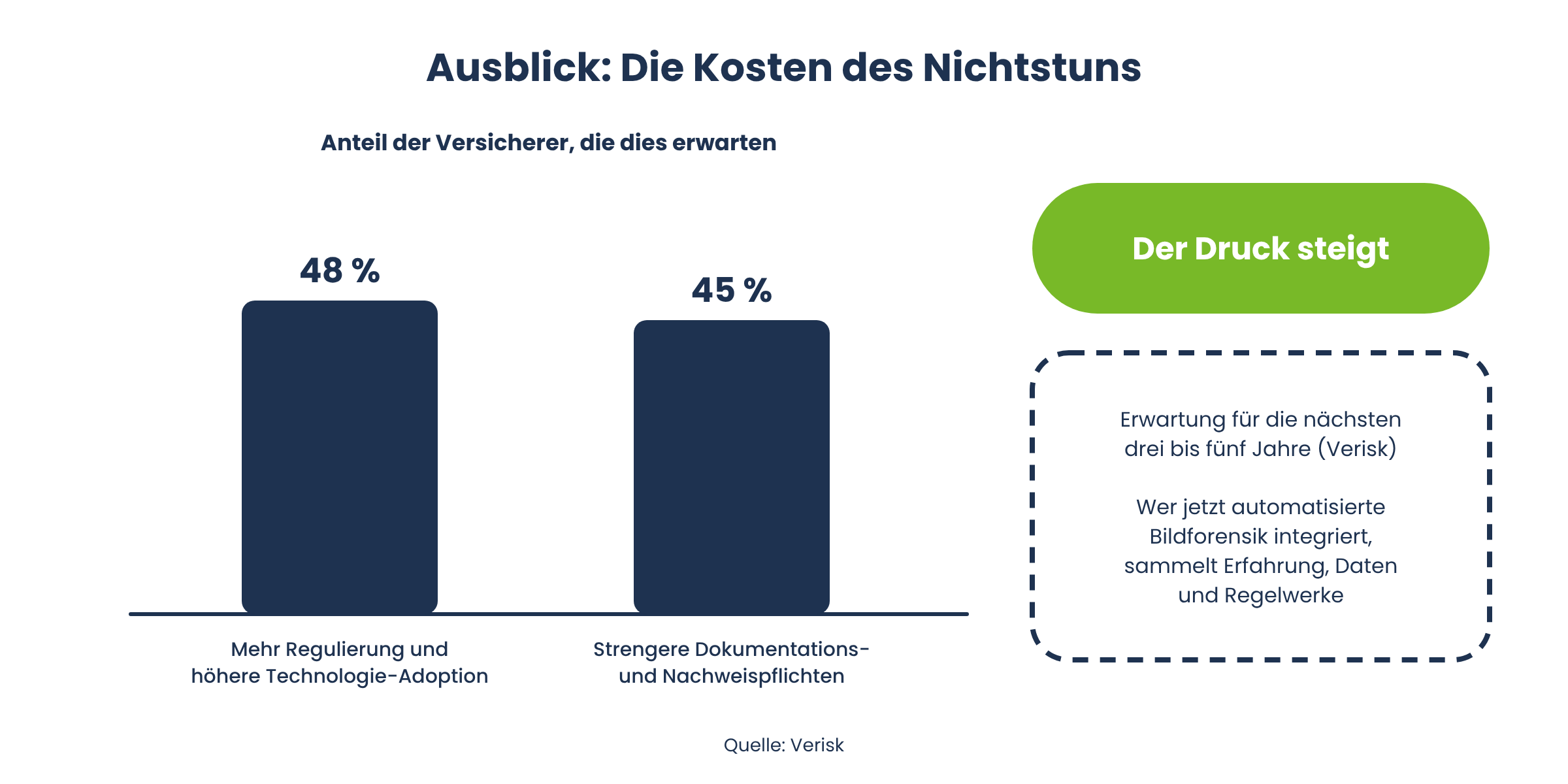
Outlook: The Cost of Doing Nothing
Generative models continue to improve. Image artifacts that currently give away an image’s artificial origin are disappearing with each new generation of models. According to Verisk , 48 percent of insurers expect more regulation and greater technology adoption, while 45 percent anticipate stricter documentation and evidence requirements over the next three to five years. Those who integrate automated image forensics into the claims process now will gain experience, data, and best practices before the pressure increases further.
The math is simple: With an estimated annual loss from fraud of around five billion euros in the German property and casualty insurance sector, even a small proportion of AI-enabled forgeries is enough to make automated verification worthwhile.
By combining automatic image verification, metadata analysis, duplicate checks, reverse image search, and explainable results, you can detect forgeries earlier—and keep the process fast for honest customers. Would you like to see how this works with your own images? Then request your free fraudify live demo now.
FAQ: Frequently Asked Questions About AI-Generated Damage Photos
Reliable results come only from automated image forensics. It analyzes light, shadows, textures, noise patterns, file structure, and metadata—details that the human eye overlooks. A visual inspection alone is not enough.
No method is infallible. That is why Fraudify combines AI techniques with traditional forensics, metadata checks, reverse lookups, and duplicate checks to deliver transparent results that humans can use to make decisions.
No. Metadata can be deleted or falsified. It is an important component, but it is only meaningful when combined with an analysis of the image's content.
Through triage: Normal images are processed automatically; only abnormal ones are sent for manual review. Explainable results help ensure that follow-up questions are asked objectively and fairly.
Yes. fraudify offers modern application programming interfaces (APIs) and can be deployed in the cloud or on-premises.


