
Deepfakes in Building Insurance: How Insurers Detect Manipulated Photos of Storm, Hail, and Water Damage
After a storm, thousands of policyholders reach out within a few days: a photo of the roof, a photo of the basement, a photo of the ceiling. For property insurers, photos have long been the most important evidence of damage—and that’s exactly why they’re an attractive target. That’s because AI tools make it easy to turn a minor claim into a major one, an old claim into a new one, or an undamaged roof into one destroyed by hail. Altered damage photos existed even before AI. What’s new is how easily and convincingly they can be created today.
The Situation: A Lot of Damage, a Lot of Photos, Little Time
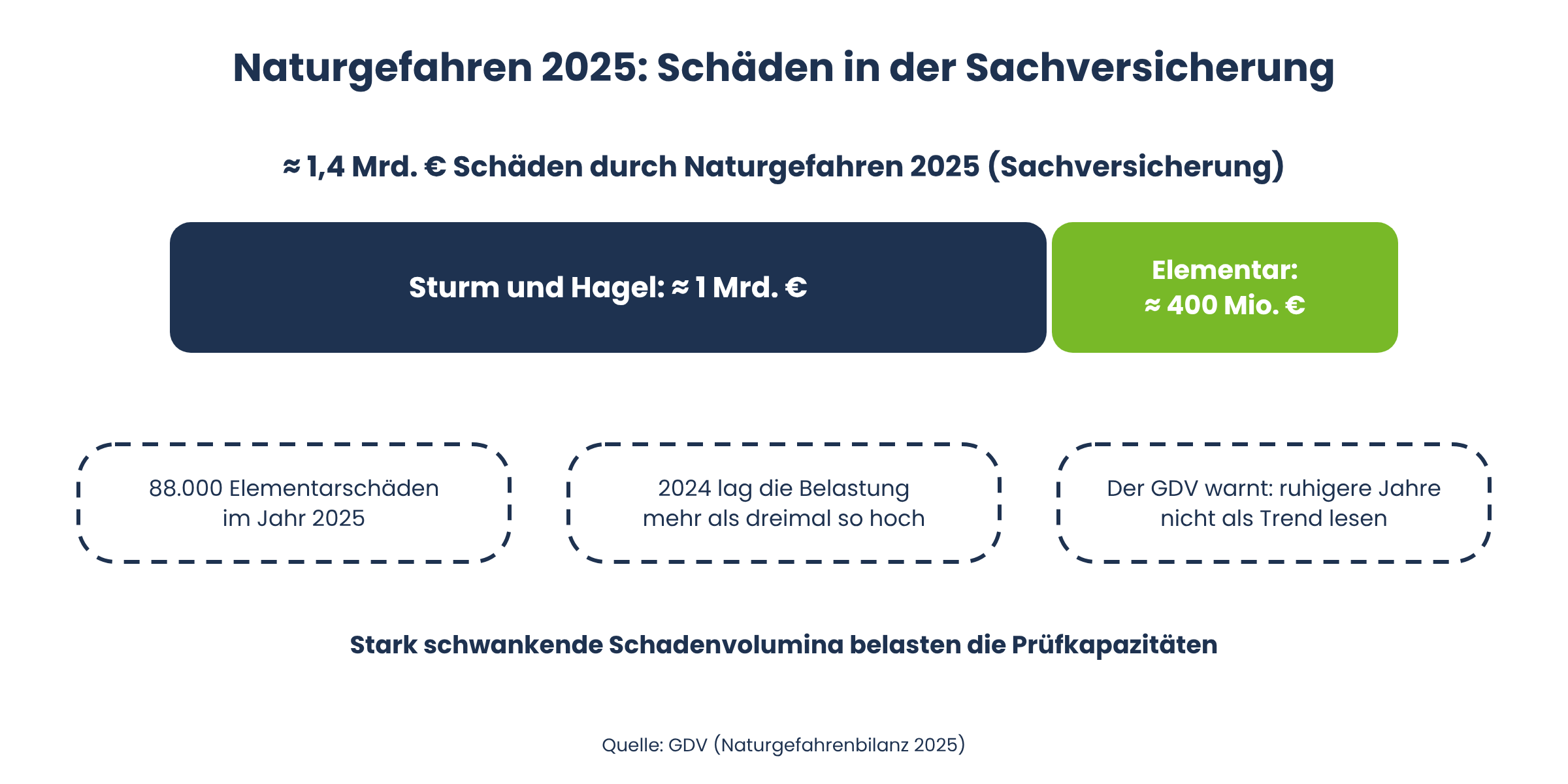
Property insurers deal with highly fluctuating claims volumes. A look at natural hazards illustrates this:
Major fluctuations: According to the GDV , natural hazards caused property insurance losses of approximately 1.4 billion euros in 2025 , of which about one billion euros were due to storms and hail and about 400 million euros were due to natural disasters, involving roughly 88,000 claims. In 2024, the financial burden was more than three times as high. The GDV expressly warns against interpreting quieter years as a trend.
Many small and medium-sized claims: The GDV describes storm and hail events as occurrences that affect many buildings simultaneously but often cause only minor to moderate damage to roofs, facades, or windows. The average insured natural hazard loss in 2025 was approximately 4,700 euros, and for storms and hail, approximately 2,100 euros.
Rising Natural Hazard Insurance: By the end of 2025 , approximately 59 percent of residential buildings in Germany had natural hazard coverage; insurance penetration is increasing. The more buildings are insured, the more claims and supporting documents are submitted to claims departments in the event of an extreme weather event.
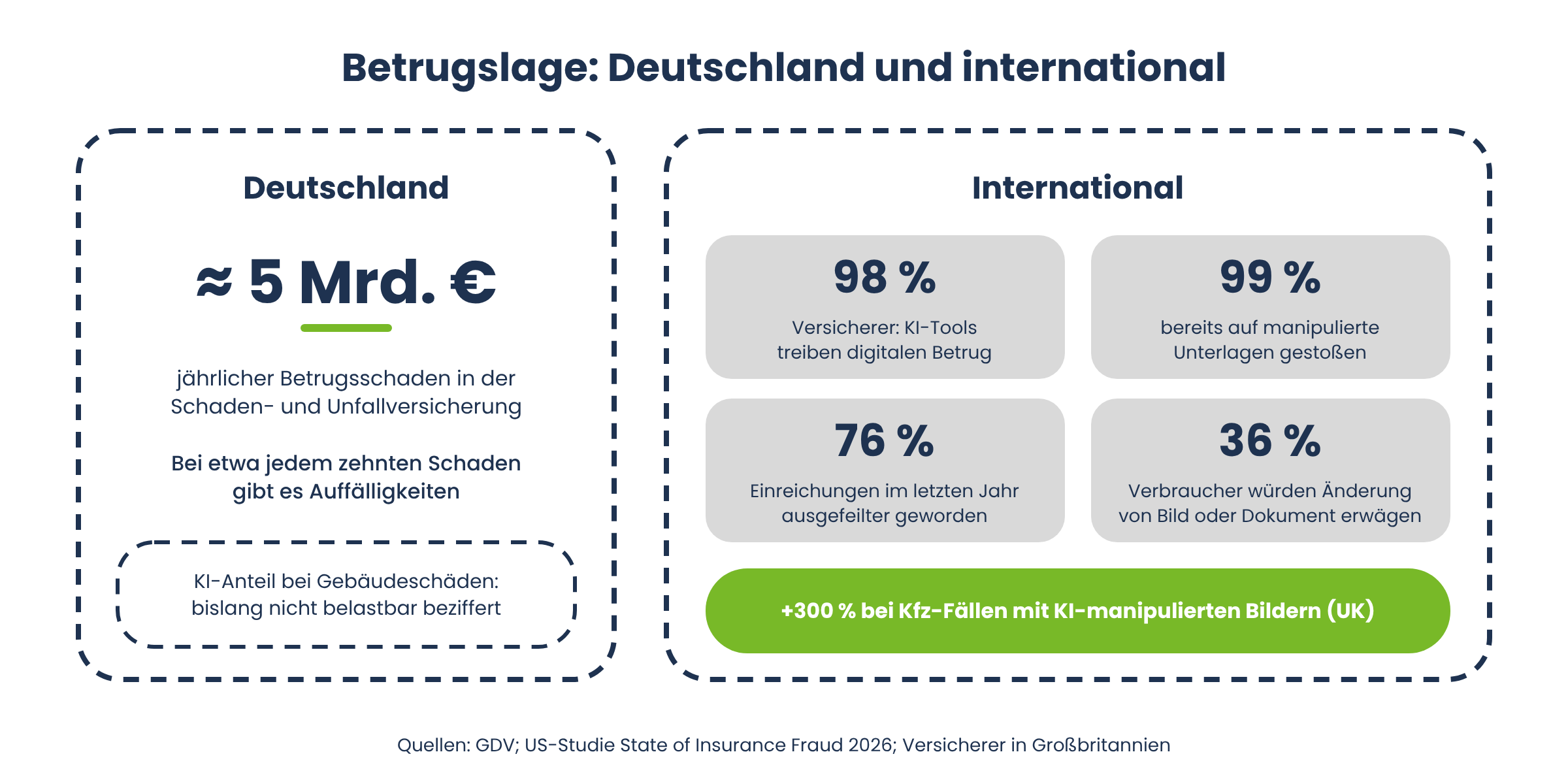
Added to this is the issue of fraud: The GDV estimates the annual losses from insurance fraud in property and casualty insurance at around five billion euros; approximately one in ten claims exhibits irregularities. The extent to which AI increases this proportion in property damage claims has not yet been reliably quantified for Germany. International figures point the way:
According to the U.S. study *State of Insurance Fraud 2026* , 98 percent of insurers agree that AI processing tools drive digital fraud; 99 percent have already encountered manipulated or AI-altered documents.
Seventy-six percent say that manipulated claims submissions have become more sophisticated over the past year , and 36 percent of consumers surveyed would consider digitally altering a damage photo or document.
In the United Kingdom, insurers reported a 300 percent increase in auto insurance claims involving AI-manipulated vehicle images. The pattern holds true for property damage claims as well: same tools, same submission methods.
Why Building Insurance Is Particularly Vulnerable
This sector offers several vulnerabilities for fraud attempts involving images:
Concentrated claims: After a storm, hail, or heavy rain, an extremely large number of claims are filed within a short period of time. Adjusters are in short supply, photos become the most important evidence—and verification capacity is the bottleneck.
High proportion of digital claims: Damage is reported via apps, portals, or email, often with cell phone photos taken without any verification of the circumstances under which they were taken.
Damage images that are difficult to verify: Roof damage is hard for laypeople and claims adjusters to assess; water stains, cracks, or moisture damage can be convincingly added using AI.
Threshold values: In many insurance policies, a thorough investigation is only required once the damage exceeds a certain threshold. This creates a blind spot precisely in the area of frequent small and medium-sized claims.
Typical fraud patterns: Legal overviews cite , among other things , inflated inventory lists, fabricated signs of burglary, and manipulated fire or water damage claims for residential property insurance. AI now provides the appropriate images and documents for these purposes.
Counterfeiting Scenarios in Everyday Claims Handling
If you’re familiar with typical scenarios, you can set specific checkpoints:
Roof and hail damage: A real, minor claim is enlarged using AI-powered inpainting; additional dents or tile damage are added; or an old photo of a previous claim is submitted as current hail damage.
Water damage and basements: Water stains, mold, or water levels are digitally inserted. Alternatively, images of floods from the media and social networks are used—even if they don’t show the claimant’s own building.
Fire and burglary damage: Soot marks, signs of forced entry on doors and windows, or damaged items are generated or exaggerated.
Reuse: The same photo appears in multiple claims, under different names, or with multiple insurers—cropped, flipped, or scaled differently.
Concealment: Metadata is deleted or altered, and the final image is photographed directly from the screen.
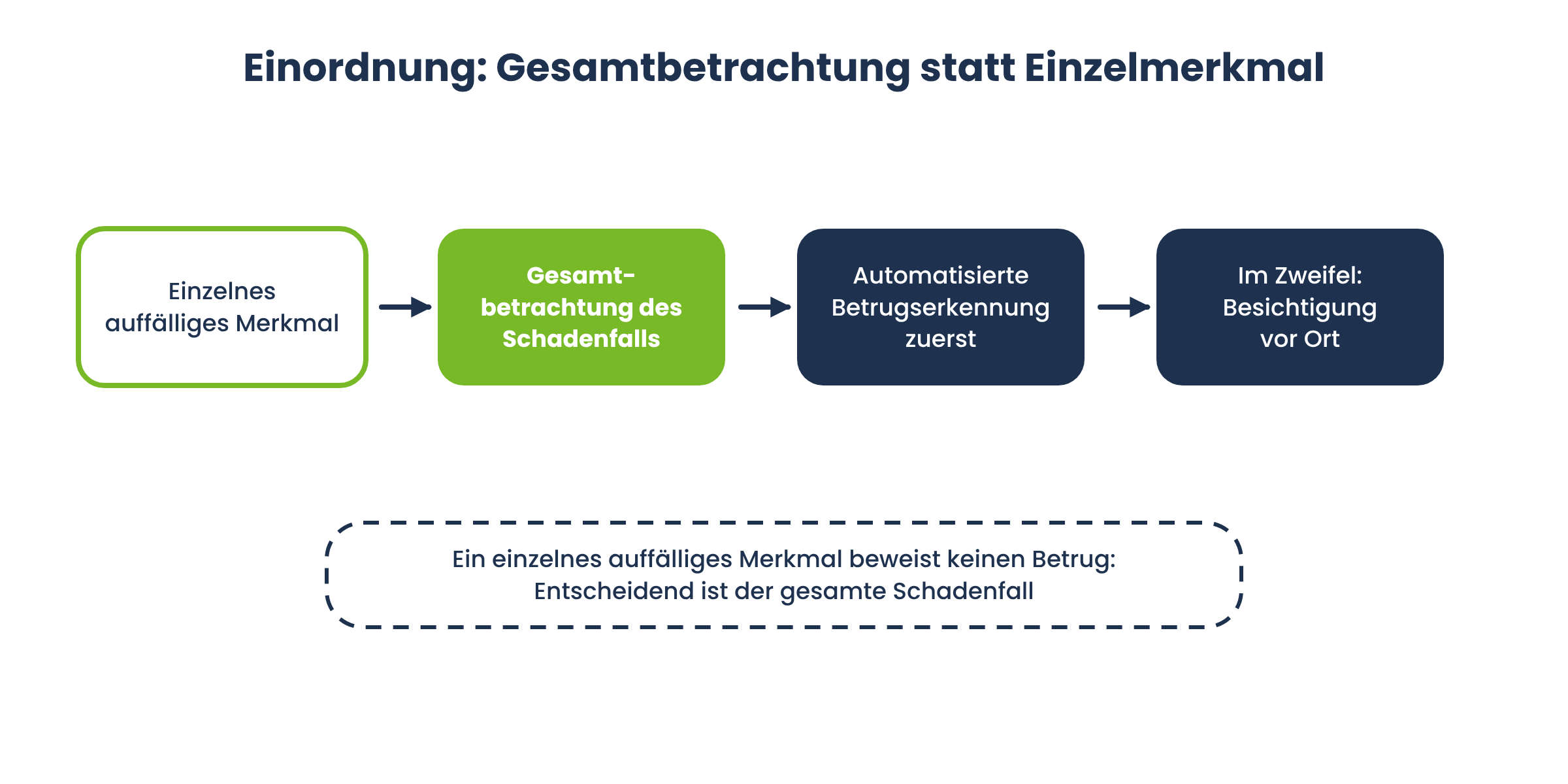
Context is key: A single conspicuous feature does not prove fraud. The overall picture is what matters.
Checklist: 5 Steps to Ensure Image Verification in Building Insurance
Step 1: Automatically review every image—even in the event of a major disaster. Forensic analysis runs during upload, not just when a claim is suspected. Unremarkable images pass through; suspicious ones go into a review queue. This keeps the process manageable even with thousands of claims following a severe weather event.
Step 2: Cross-check metadata with the claim details. Does the time the photo was taken match the reported event? Does the location where the photo was taken match the insured address? If metadata is missing or contradicts the information provided, this is a signal to trigger an in-depth review.
Step 3: Identify duplicates across cases. You can only detect old claims, multiple submissions, and series of images by comparing images across cases—even if they’ve been cropped, scaled, or are in a different format. Learn more in our article “Finding Duplicate Images with fraudify.”
Step 4: Reverse image search online. After flood and hail events, massive numbers of images circulate in the media and on social networks. An automated reverse image search reveals whether a submitted photo already exists elsewhere.
Step 5: Explainable results, configurable rules, and targeted use of experts. A set of rules defines the thresholds at which anomalies are escalated. The technology provides a rationale for its assessment, and experts and case managers make decisions where necessary, rather than across the board.
How fraudify Image Forensics Supports Building Insurers
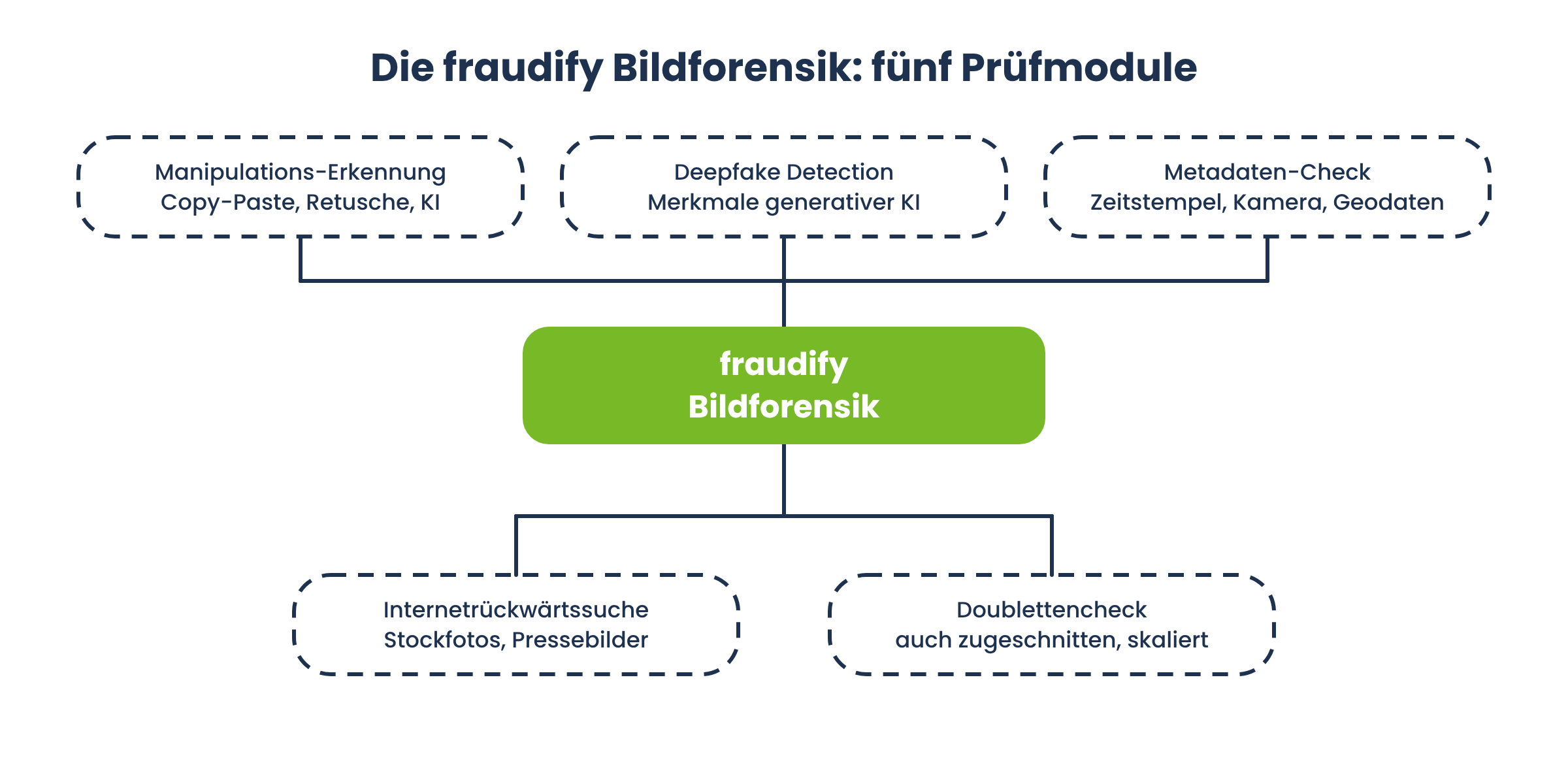
Fraudify image forensics incorporates these steps into a single solution:
Manipulation Detection: Copy-paste, retouching, and blurring; combined image sources; and AI-based manipulations.
Deepfake Detection: Checking for typical characteristics of generative AI in lighting, shadows, textures, details, and file structure.
Metadata check: Timestamp manipulation, implausible camera data, software indicators, and geodata.
Reverse image search: stock photos, press photos, multiple uses, and manipulated variants.
Duplicate check: Includes cropped, scaled, or otherwise reformatted versions of the same image.
In the day-to-day operations of the claims department, three characteristics are crucial:
Explainable AI: Assessments are transparent—to customers, auditors, and regulators.
Hybrid and multimodal: fraudify combines AI-based methods with traditional forensic techniques and analyzes various image data together.
Customizable rules and flexible integration: Verification parameters can be adjusted. The system can be operated in the cloud or on-premises, and integrates with existing claims systems via APIs.
In 2024, fraudify received the Insurance Industry Innovation Award in the Customer Experience category for this development.
Outlook: Be Prepared Before the Next Event Strikes
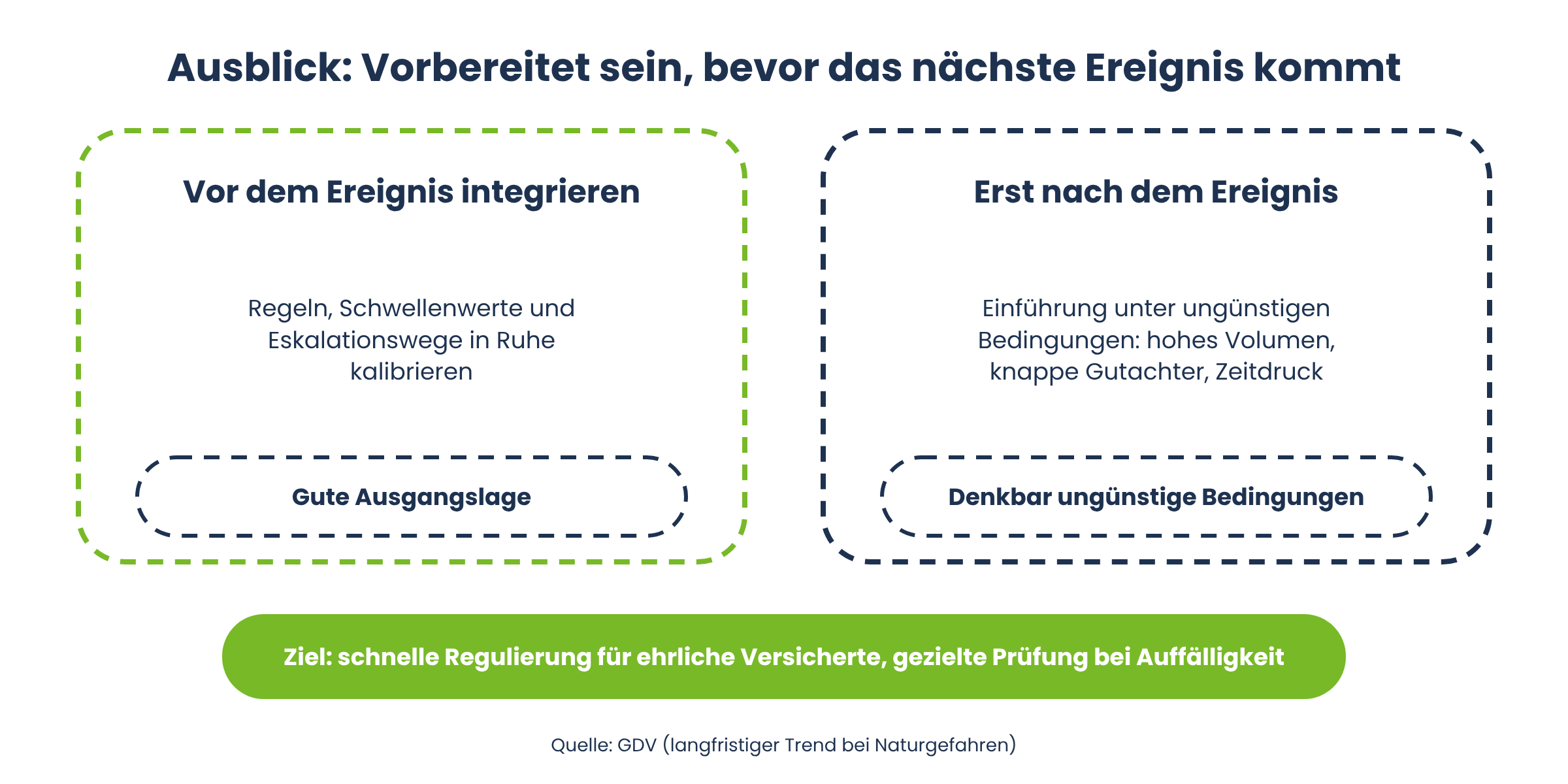
The GDV warns that the long-term trend for natural hazards is on the rise. At the same time, generative models are continuing to improve. Those who wait until after the next major loss event to introduce automated image forensics will be implementing it under the most unfavorable conditions imaginable: high volume, a shortage of experts, and time pressure. Those who integrate it beforehand can calmly calibrate rules, thresholds, and escalation procedures.
The issue of fairness also remains central. The goal is not blanket suspicion, but rather swift claims processing for the overwhelming majority of honest policyholders—and targeted scrutiny where images appear suspicious.
For property insurers, three factors converge: highly fluctuating claim volumes, a high proportion of digitally submitted photos, and AI tools that can be used to credibly fake damage images. Automated image verification, metadata matching, duplicate checks, reverse image searches, and explainable results make your claims settlement process robust
FAQ: Frequently Asked Questions About Deepfakes in Building Insurance
Reliable only with automated image forensics. It checks for light, shadows, textures, file structure, and metadata, as well as duplicates and reverse lookups—details that are easily overlooked during a visual inspection.
Yes, exactly those. When in-depth investigations are tied to thresholds, blind spots arise for minor and moderate damage—that is, in situations where a particularly high number of claims are filed, such as after a hailstorm or a storm.
Yes. The duplicate check also detects cropped, scaled, or otherwise reformatted versions of the same image.
No. It sets priorities and provides justification. Reviewers and case workers make the decisions—and are deployed more strategically where images stand out.
Yes. fraudify offers modern APIs and can be deployed in the cloud or on-premises.


