
Generative Engine Optimization (GEO): How Companies Can Gain Visibility on ChatGPT, Google Gemini, and Perplexity
Just a few years ago, the path to information almost always went through traditional search engines like Google. Users would enter a search term, click on various websites, and compare the information provided there on their own. This search behavior is currently undergoing a fundamental shift—time-consuming research is a thing of the past; today, AI models generate overviews in a matter of seconds. Our colleague Lisa discusses the implications of this for businesses in a podcast with Gundel Woite from Jenpix.
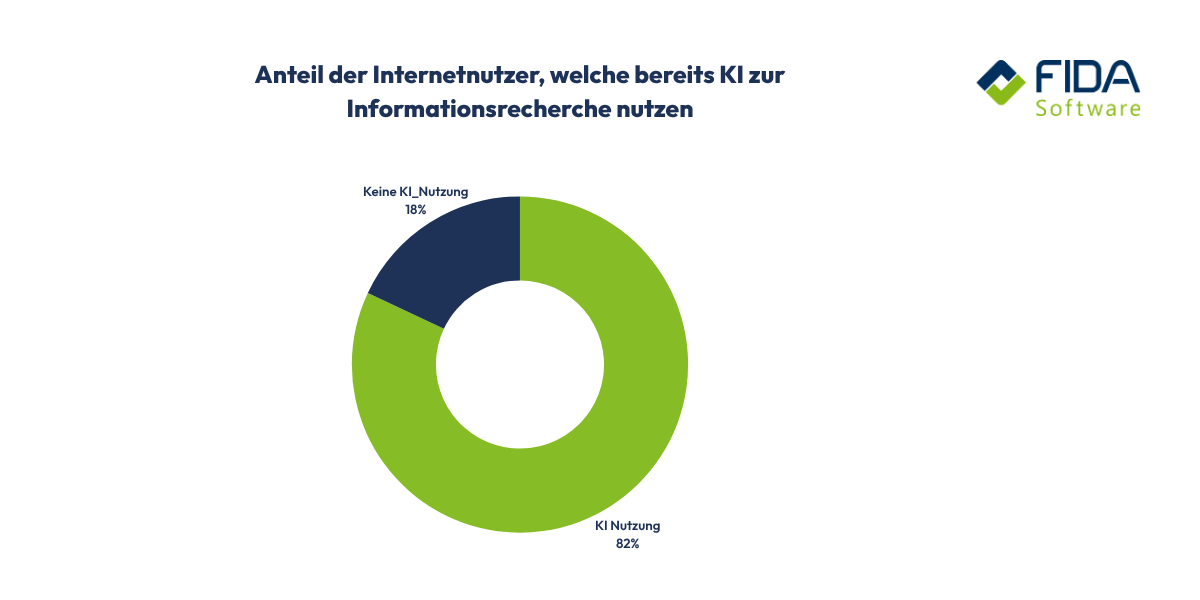
Since the emergence of generative AI based on Large Language Models (LLMs) and AI-powered search engines, the way we gather information has been fundamentally changing. Applications like ChatGPT, Google Gemini, Perplexity, or Google AI Overviews no longer just provide users with a list of relevant websites; instead, they formulate direct answers to complex questions. The extent of this shift is illustrated by a study from Bayerischer Rundfunk, which found that 82 percent of Germans are already using AI to search for information.
For businesses, this development represents a profound shift. Those who are not visible in AI systems or are not recognized by AI models as trustworthy sources will lose visibility in the long term. This is precisely where Generative Engine Optimization (GEO) comes into play.
While traditional search engine optimization (SEO) focuses on achieving good rankings in search engines, Generative Engine Optimization pursues a broader goal: companies should also be present in AI search and be recognized as relevant sources by generative search systems. In this article, you’ll learn
what Generative Engine Optimization (GEO) entails,
why the role of SEO is changing due to generative AI,
what best practices companies should follow,
and how you can sustainably improve your company’s visibility in modern AI systems.
What is Generative Engine Optimization (GEO)?
Generative Engine Optimization (GEO) refers to the optimization of a company’s digital visibility for generative AI systems and AI-based search engines. The term is often referred to as Generative Engine Optimization (GEO) and describes the evolution of traditional search engine optimization for the age of generative AI.
While traditional search engine optimization (SEO) aims to rank as high as possible on Google, Generative Engine Optimization (GEO) pursues a different goal. Your company should be understood by AI models, classified as trustworthy, and actively recommended in the responses from ChatGPT, Google Gemini, Perplexity, or Google AI Overviews.
In this way, Generative Engine Optimization (GEO) adds an additional layer to traditional engine optimization. It is no longer solely about providing content that is relevant to search engines. Rather, AI systems must understand what your company stands for, what expertise it possesses, and which information is trustworthy.
The significance of this development is steadily increasing. More and more people are using ChatGPT or other AI systems to prepare for purchasing decisions or to learn about products and services.
A simple example illustrates the difference. In the past, for example, a user might have searched for:
IT service provider in Kassel
Today, the query is often:
Which IT service provider in Kassel supports medium-sized companies in implementing AI and generative AI?
Instead of a traditional list of search results, AI systems now provide concrete answers, including recommendations and explanations. Users often no longer even leave the platform but make a decision based on the AI-generated information. This is transforming the entire customer journey.

Why Is AI Changing Search Behavior on the Web?
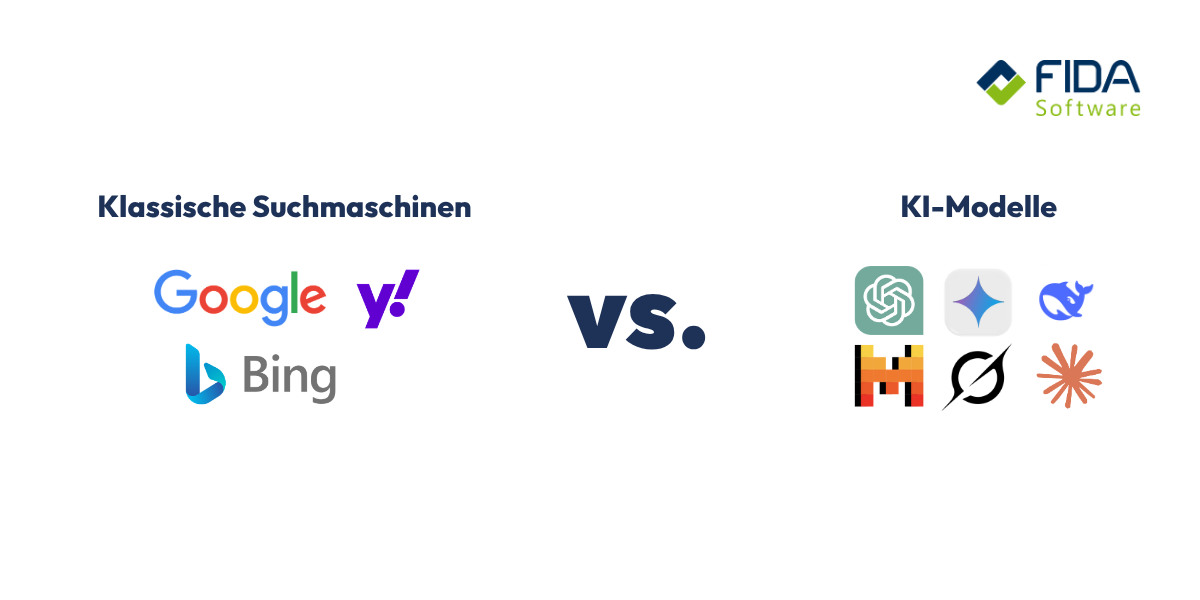
The way people search for information is changing. Traditional search engines like Google present a list of relevant websites from which users must choose for themselves.
Modern AI systems are already handling this step for users. Applications like ChatGPT, Perplexity, Google Gemini, and Google AI Overviews analyze large amounts of publicly available information, evaluate its quality, and generate independent responses based on it.
This is made possible by so-called Large Language Models (LLMs). These powerful language models form the technical foundation of modern generative AI. The underlying models have been trained on enormous amounts of data and can summarize content and generate new text. This is precisely why modern generative engines differ significantly from traditional search engines.
While Google Search has primarily indexed and ranked web pages up to now, generative search systems interpret content, compare different sources, and formulate their own answers based on that information. This difference is particularly evident when it comes to more complex questions.
For example, users today might ask:
Which ERP system is suitable for medium-sized companies?
Which marketing agency has experience with generative AI?
Which provider has special expertise in the field of AI?
Which solution is right for my company?
Which companies does ChatGPT recommend for SEO and digital transformation?
At the same time, AI systems handle the research, evaluation, and summarization of available information. This presents a new challenge for companies. It is no longer exclusively humans who decide what content is relevant. First, the AI models assess which sources appear trustworthy and which information is included in the final answers.
Why is Generative Engine Optimization (GEO) becoming increasingly important for businesses?
The use of generative AI is growing rapidly. More and more people are starting their searches directly in ChatGPT, Perplexity, Google Gemini, or via Google AI Overviews. Especially for consultation-intensive services, these AI-based search engines are increasingly replacing traditional Google searches.
A study by Search Engine Journal shows how user search behavior is changing. The key takeaways businesses should take from this are:
AI-powered searches captivate users
Clicks now occur only when there’s an intent to buy
Website traffic is declining, while visibility is becoming more important
According to forecasts, the number of AI tool users in the “AI Tools Users” market segment will grow steadily worldwide between 2025 and 2031. By 2031, the number of AI tool users is expected to reach approximately 1.2 billion.
This raises the question today: Does AI even know my company? Because only companies that are understood by AI systems and deemed trustworthy by the underlying Large Language Models (LLMs) will appear in the generated responses at all.
This affects nearly every industry. Whether it’s IT service providers, industrial companies, law firms, agencies, or software providers—anywhere customers search for information online, Generative Engine Optimization (GEO) is becoming increasingly important.
Will Generative Engine Optimization (GEO) replace traditional search engine optimization (SEO)?
A common question is whether Generative Engine Optimization (GEO) will replace traditional search engine optimization (SEO) in the future. The answer is a clear no.
Rather, Generative Engine Optimization (GEO) complements existing SEO strategies. Both disciplines pursue the same goal—increasing a company’s digital visibility—but differ in how they achieve it.
Traditional search engine optimization focuses on optimizing content and websites so that they appear as high as possible in Google and other search engines. Generative Engine Optimization (GEO) goes a step further: It focuses on how AI systems understand, evaluate, and use information in their responses.
SEO = Click
GEO = Answer
In other words: SEO ensures that your website is found. Generative Engine Optimization ensures that your company is recommended as a trustworthy source by ChatGPT, Perplexity, Google Gemini, or Google AI Overviews. That’s why SEO remains indispensable, and GEO is just another discipline within search engine marketing.
Is SEO the foundation for successful Generative Engine Optimization?
Many of the measures used in traditional search engine optimization also form the basis for successful Generative Engine Optimization (GEO). These include, among others:
technically sound websites
high-quality content
structured content
fast loading times
internal links
structured data
High-quality backlinks
Up-to-date company information
a clear page structure
These factors help not only Google but also modern AI systems to correctly categorize content. The difference is that generative AI evaluates information more heavily within the overall context. While traditional search engines rank individual pages, AI models attempt to understand
what your company stands for,
what topics your brand covers,
what expertise it possesses,
whether your information is corroborated by other sources,
and whether your content appears trustworthy.
This significantly changes the role of content.
In the future, it will no longer be enough to simply include individual keywords. High-quality content that comprehensively answers questions and offers real added value will become much more important.
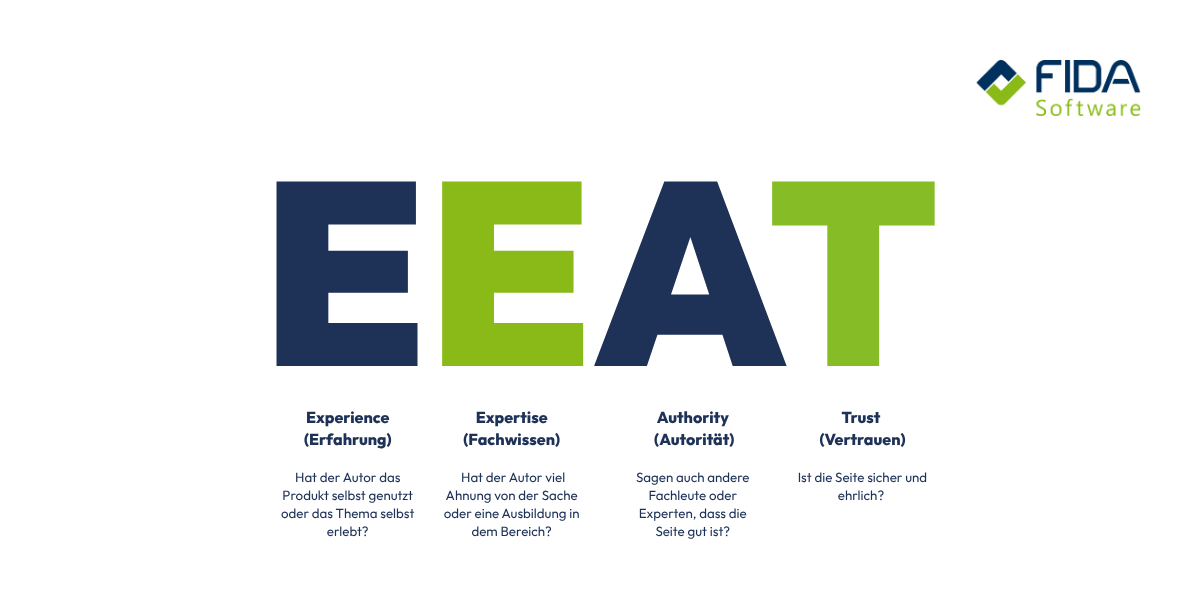
Why is EEAT (Experience, Expertise, Authoritativeness, and Trustworthiness) still the most important principle?
Modern AI systems do work differently from traditional search engines. They don’t just evaluate individual keywords or technical factors; instead, they analyze various sources and use them to generate their own content. However, experience, expertise, authority, and trust continue to play a crucial role. For Large Language Models (LLMs), what matters most is whether multiple sources provide the same information and whether your company is perceived as an expert in the digital space.
Among the most important trust signals are:
high-quality content
up-to-date content
specialized articles
white papers
Studies
Expert interviews
Customer testimonials
Press Coverage
High-Quality Backlinks
Reviews
Consistent company data
The more frequently a company is mentioned on different websites, the better AI systems can assess its expertise. This is precisely why so-called brand mentions are becoming increasingly important.
Good content remains one of the most important factors for success
High-quality content is the foundation of any successful Generative Engine Optimization (GEO). This means your content should be written for both people and modern AI-based search engines. Content that answers specific questions, explains contexts, and has a clear structure is particularly effective.
The higher the quality of your content, the more likely it is that ChatGPT, Google Gemini, Perplexity, or Google AI Overviews will include this information in their responses. An important principle to keep in mind is: It’s better to have a few high-quality pieces of content than many superficial ones.

Backlinks are no longer the sole determining factor; brand mentions are gaining in importance
Many companies focus exclusively on backlinks. However, brand mentions also play an important role in Generative Engine Optimization (GEO). A brand mention refers to any mention of a brand or company on the internet—regardless of whether a link was included or not. Such mentions can be found, for example, on:
Industry portals
News websites
Industry directories
Blogs
Podcasts
Social media
Online magazines
The more often your brand is mentioned in high-quality sources, the more positive signals AI systems receive. Generative AI, in particular, uses such mentions to better assess a company’s credibility.

Whether it's SEO or GEO, "digital relevance" is the key term
This refers to the sum of all digital signals a company leaves behind on the internet. The more consistent these signals are, the easier it is for search engines and AI systems to correctly categorize your company. Digital relevance doesn’t happen overnight. It grows through consistent content, expert knowledge, credible mentions, and clear positioning. That’s precisely why Generative Engine Optimization (GEO) shouldn’t be viewed as a short-term project, but rather as a long-term component of a company’s digital strategy.

GEO Checklist: 5 Tips for Greater Visibility in AI Systems
Successful Generative Engine Optimization (GEO) consists of many building blocks. Companies don’t have to start from scratch. Those who already rely on high-quality content, a technically sound website, and sustainable SEO strategies often have a solid foundation.
The following best practices will help you further increase your visibility in AI systems, AI-based search engines, and modern generative engines.
1. Create High-Quality Content
High-quality content forms the foundation of any successful Generative Engine Optimization (GEO). Modern AI models evaluate not just individual keywords, but the overall informational content of a post. The goal should therefore be to create content that fully answers questions and offers genuine added value.
This includes, for example:
Technical articles
White papers
Checklists
Studies
Guides
Case Studies
FAQ Pages
The better your content is structured, the easier it is for AI systems, large language models (LLMs), and Google AI Overviews to understand the information it contains and use it in their responses.
2. Showcase Your Expertise
Not only the content, but also the sender plays an important role in Generative Engine Optimization (GEO). Clearly demonstrate on your website
what expertise your company possesses,
which projects have been successfully completed,
what certifications you hold,
and which employees have specialized expertise.
Expert profiles, success stories, and references build trust—with both people and AI systems.
3. Optimize Websites Technically
Even in the age of generative AI, the technical optimization of websites remains a key component of successful SEO. Pay attention to the following, among other things:
fast loading times,
mobile-optimized pages,
structured data,
clear navigation,
internal links,
intuitive URL structures.
The easier it is for search engines and AI systems to crawl content, the better they can interpret it.
4. Strategically Build Brand Mentions
A strong brand isn’t built solely on your own website. For Generative Engine Optimization (GEO), external brand mentions are becoming increasingly important. These include, for example, mentions on:
industry portals
Trade magazines
Podcasts
News websites
Blogs
Business directories
Social media platforms
The more often your brand is mentioned in trustworthy sources, the more likely ChatGPT, Google Gemini, Perplexity, or other AI systems are to classify your company as a relevant source.
5. Keep your information up to date
Modern AI models prefer up-to-date information. Therefore, check the following regularly:
Company information,
contact information,
service descriptions,
references,
press releases,
contact information.
Outdated information can cause AI systems to generate inaccurate or incorrect responses.
6. Test AI search regularly
Monitoring is an important part of any Generative Engine Optimization (GEO) strategy. Regularly check the responses provided by various AI systems. For example, use:
ChatGPT
Google Gemini
Perplexity
Google AI Overviews
Ask questions such as:
What does my company do?
What is my brand known for?
What services do I offer?
What alternatives does the AI recommend?
This way, you can identify early on whether incorrect information or incomplete company data is circulating.
What are some common mistakes in Generative Engine Optimization?
Since Generative Engine Optimization (GEO) is still in its early stages of development, there are numerous myths circulating. Among the most common mistakes are:
publishing only AI-generated content,
creating content without real added value,
outdated company information,
missing brand mentions,
inconsistent data across different websites,
technical weaknesses,
lack of monitoring of AI responses,
short-term thinking instead of sustainable SEO strategies.
Many companies focus exclusively on Google rankings. Meanwhile, digital search is increasingly evolving toward intelligent search systems that evaluate information on their own.
Why Should Companies Regularly Check Their AI Visibility?
Many companies regularly analyze their Google rankings or monitor their performance as part of their SEO strategies. However, they check much less frequently what information modern AI systems actually provide about them. Yet this is precisely a central component of successful Generative Engine Optimization (GEO). Ask yourself the following questions, for example:
What does ChatGPT say about my company?
What information does Perplexity provide?
How does Google Gemini describe my services?
Do I appear in the Google AI Overviews?
Are the AI-generated responses accurate and up-to-date?
Regular monitoring helps identify incorrect statements early on and continuously improve your visibility. That’s exactly why reviewing your own AI responses has become one of the most important best practices in the field of Generative Engine Optimization (GEO).

How do I check my visibility in AI systems?
The first step is surprisingly simple: Ask the AI systems questions about your company yourself.
Many companies know exactly how they’re found on Google. Far fewer, however, know what information ChatGPT, Perplexity, or Google AI Overviews provide about them. Yet just a few targeted questions are enough to get an initial impression. For example:
What does Company XY do?
What is Company XY known for?
What services does Company XY offer?
Is Company XY a reputable provider?
What alternatives are there to Company XY?
Why should I choose Company XY?
What are people’s experiences with Company XY?
Which companies do you recommend for [your service]?
Pay attention not only to the answers themselves, but also to the sources cited and whether the information is up-to-date and accurate. Especially with services that require explanation, it often becomes clear whether the AI has truly understood your company or is merely compiling individual pieces of information.

Which metrics are key for Generative Engine Optimization (GEO)?
Unlike traditional search engine optimization (SEO), there are currently no uniform standards for measuring success in Generative Engine Optimization (GEO). Nevertheless, companies can already use various metrics to evaluate their visibility in AI systems such as ChatGPT, Google Gemini, Perplexity, or Google AI Overviews.
The most important GEO metrics include:
Visibility in AI responses: How often is your company mentioned in responses from ChatGPT, Google Gemini, Perplexity, or Google AI Overviews?
Quality of information: Is the information provided accurate, up-to-date, and complete, or does it contain misinformation?
Cited sources: Which websites and content do AI systems draw upon when describing your company or services?
Brand Mentions: How often is your brand mentioned on relevant websites, in trade media, or on industry portals?
Referral traffic from AI systems: Is the website traffic coming to your site via AI platforms or AI-based search functions increasing?
Conversions from AI Search: Are inquiries, leads, or sales resulting from visits via AI systems on the rise?
Digital Reputation Trends: Is your brand’s perception improving through positive mentions and consistent company information?
As generative AI, AI-based search engines, and the underlying large language models (LLMs) continue to evolve, the methods for measuring success will also change.
Conclusion: Generative Engine Optimization Is Becoming a Key Success Factor
Generative Engine Optimization (GEO) is becoming an important component of modern online marketing strategies. More and more users are turning to ChatGPT, Google Gemini, Perplexity, or Google AI Overviews to research information and prepare for purchasing decisions.
This is changing the way companies build digital visibility. In addition to traditional search engine optimization (SEO), optimization for generative engines (GEO) is steadily gaining importance. Companies should therefore not only monitor their rankings on Google but also analyze what information modern AI systems provide about their brand.
Those who focus early on high-quality content, strong brand mentions, technically sound websites, and sustainable SEO strategies improve their chances of being visible in both traditional search engines and AI search.
Generative Engine Optimization (GEO) is therefore not a short-term trend, but a long-term component of successful online communication.
FAQ: Frequently Asked Questions About Generative Engine Optimization
Generative Engine Optimization (GEO) refers to the optimization of websites and content for AI systems such as ChatGPT, Google Gemini, Perplexity, or Google AI Overviews.
No. Generative Engine Optimization (GEO) complements traditional search engine optimization (SEO) and expands existing SEO strategies to include optimization for AI-based search engines.
More and more people are using ChatGPT, Perplexity, or Google Gemini as a starting point for their searches. As a result, Generative Engine Optimization (GEO) is becoming increasingly important for businesses.
Large Language Models (LLMs) form the technical foundation of modern generative AI. These AI models analyze large amounts of information and use it to generate new responses.
Key best practices include high-quality content, up-to-date content, technical optimization of websites, strong brand mentions, regular monitoring of AI responses, and sustainable SEO strategies.
Regularly ask questions about your company in ChatGPT, Google Gemini, or Perplexity, or check your presence in Google AI Overviews. This will help you quickly determine whether your information is being presented accurately.


