
Deepfakes in Auto Insurance: How Insurers Detect Manipulated Photos of Comprehensive and Accident Damage
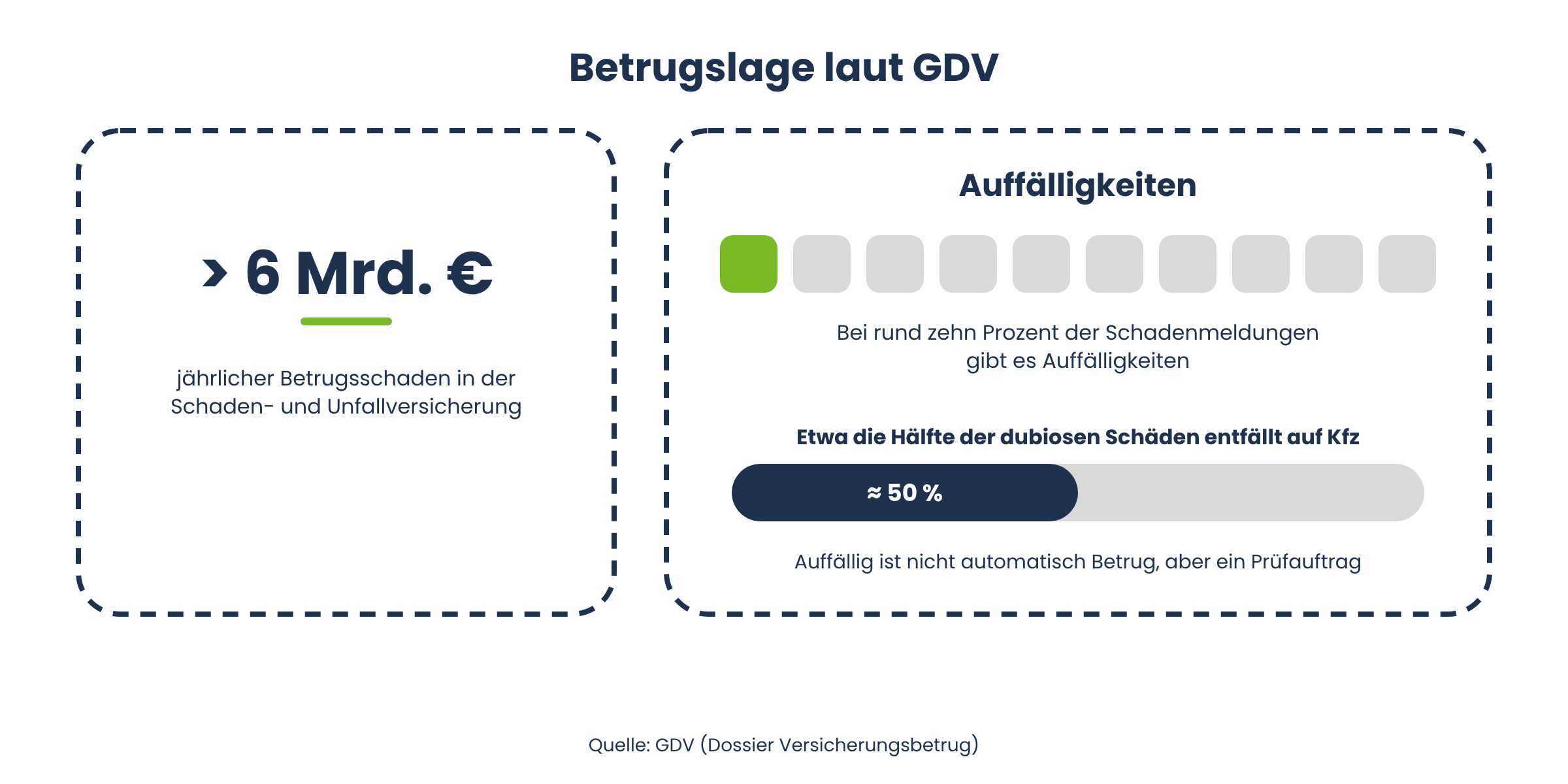
Auto insurance is the mass-market segment of property and casualty insurance: numerous claims, small- to medium-sized payouts, and a high degree of digitization. A smartphone photo of a dented door has long been the standard form of evidence—and in many processes, it directly determines whether repairs are approved, how costs are calculated, and when payments are made. This is precisely why the auto insurance sector is so attractive for AI-enabled fraud. The GDV notes: The evidentiary value of digital photos and documents can no longer be taken for granted, because today they can be more easily altered or generated entirely artificially. According to GDV data, approximately half of all dubious claims are in the auto insurance sector.
The Situation: High Cost Pressure, a Large Number of Claims
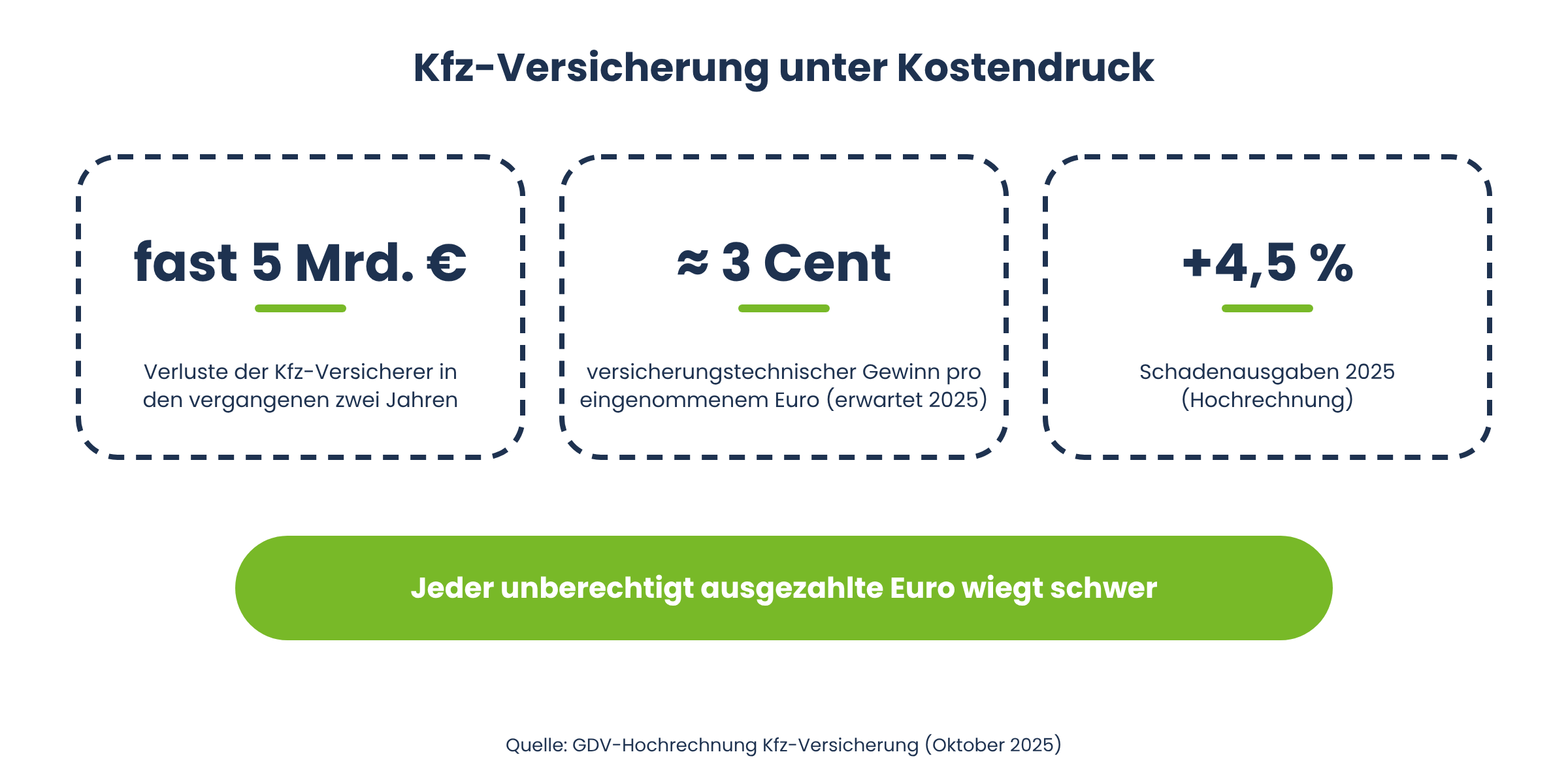
Auto insurers are under financial pressure. Every euro paid out unjustifiably therefore carries significant weight:
Losses and slim margins: According to the GDV , auto insurers have suffered losses of nearly five billion euros over the past two years due to rapidly rising repair costs ; for 2025, the association expects only about three cents in underwriting profit per euro collected. Claim payments are projected to rise by about 4.5 percent in 2025.
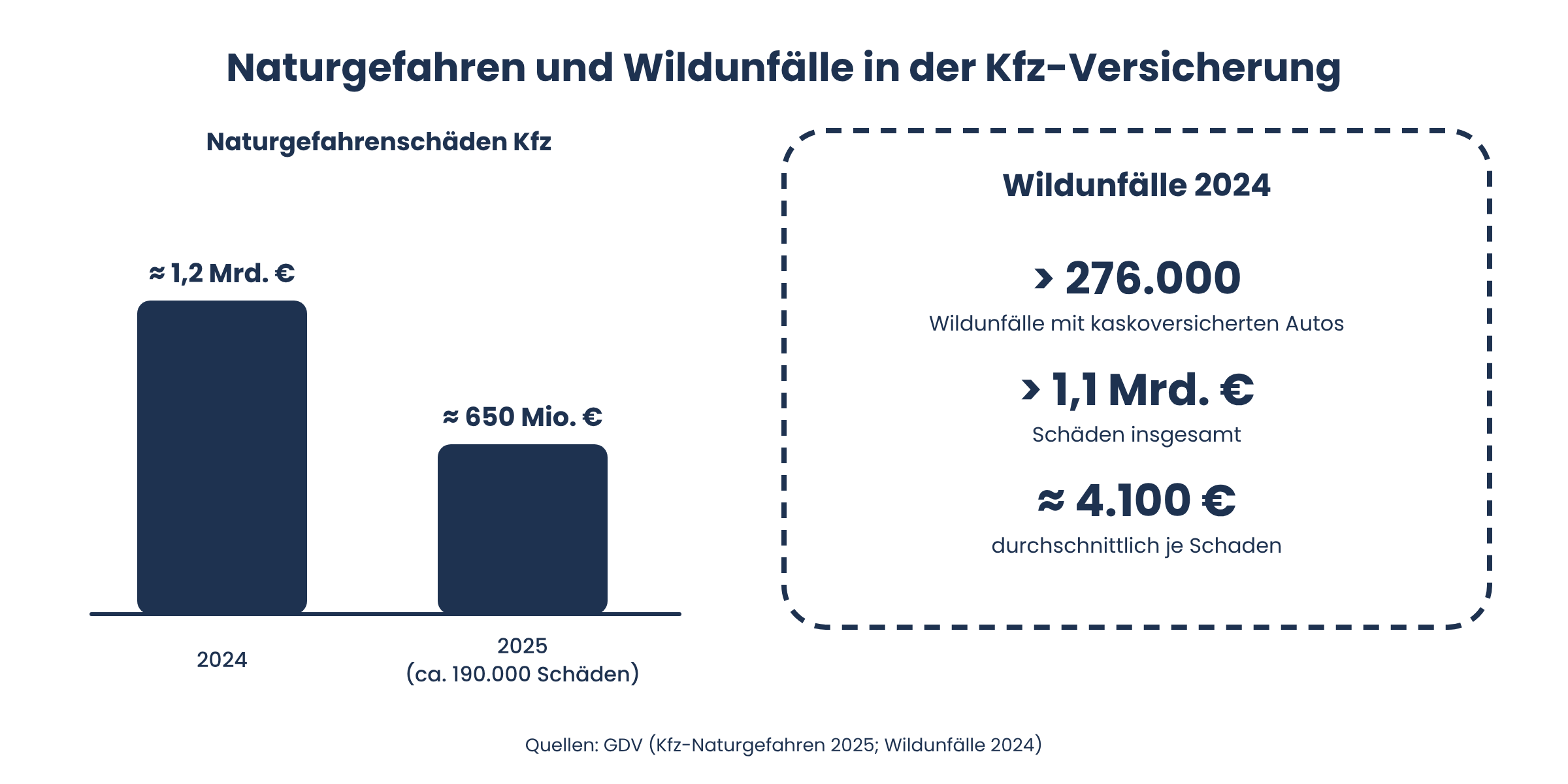
Natural hazards as a cumulative risk: In 2025, auto insurers paid out approximately 650 million euros for damage caused by natural hazards across about 190,000 reported claims; in 2024, the figure was approximately 1.2 billion euros. The GDV warns against overestimating the decline.
Mass claims from wildlife collisions: In 2024, insurers recorded over 276,000 wildlife collisions involving vehicles with comprehensive coverage; the claims totaled more than 1.1 billion euros, averaging around 4,100 euros per claim.
Added to this is the issue of fraud: The GDV now estimates the annual losses from insurance fraud in property and casualty insurance at more than six billion euros; approximately ten percent of claims reports show irregularities. Insurers are seeing an increase in suspicious claims reports, particularly in auto insurance. A suspicious claim is not automatically fraud—but it does warrant an investigation. To date, there are no reliable figures specifically regarding AI-faked auto damage images in Germany. However, the international trend is clear:
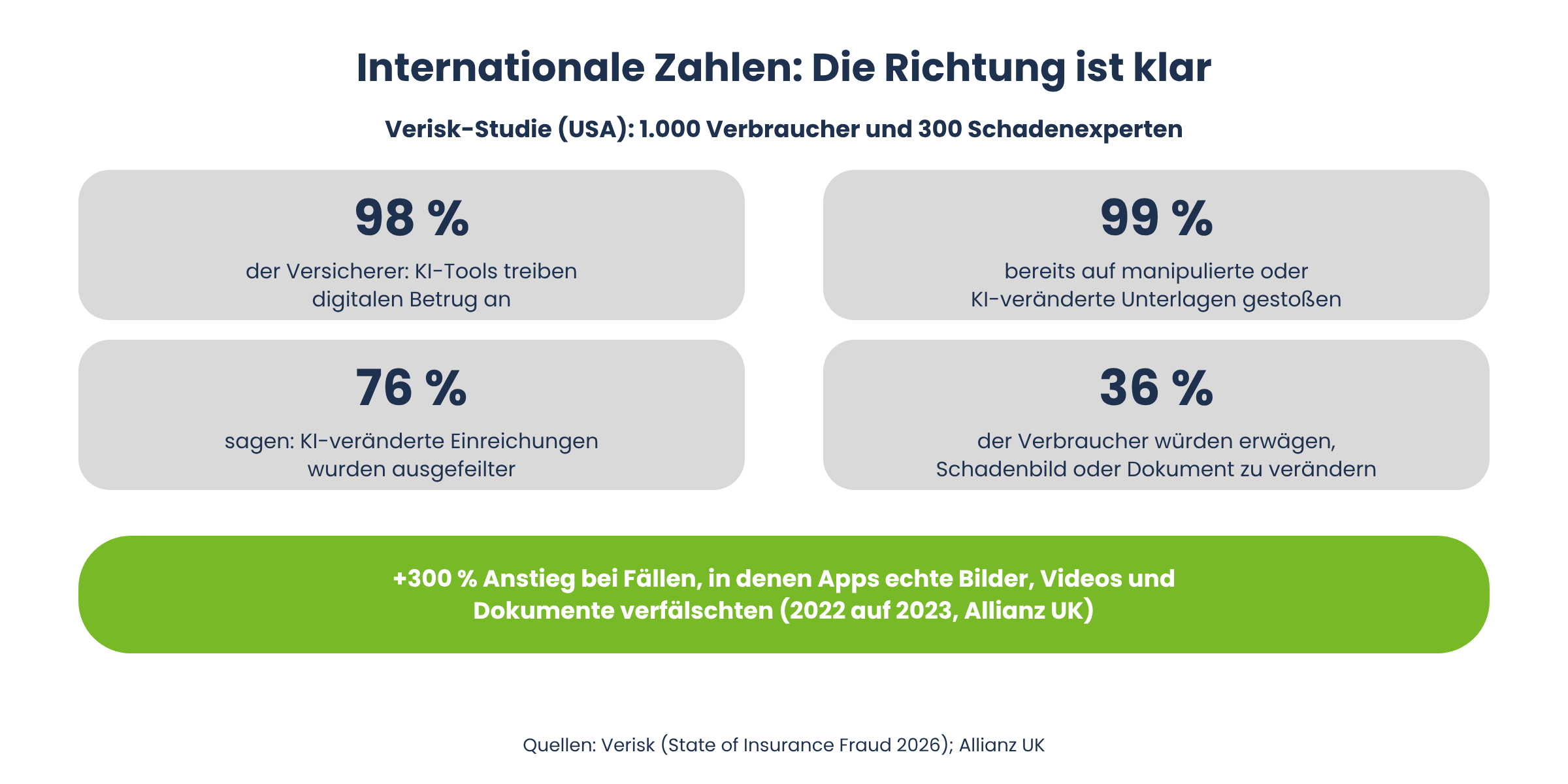
Allianz UK reported that cases in which apps were used to falsify genuine images, videos, and documents rose by 300 percent from 2022 to 2023 (based on Allianz data on staged auto accidents). One documented case: Fraudsters edited a social media photo of a van to make it appear as though it had been in an accident with a cracked bumper—complete with a fake repair invoice for more than 1,000 pounds.
According to the “State of Insurance Fraud 2026” study , 98 percent of insurers agree that AI editing tools are driving digital fraud; 99 percent have already encountered manipulated or AI-altered documents.
Seventy-six percent say AI-altered claims have become more sophisticated over the past year, and 36 percent of consumers surveyed would consider digitally altering a damage photo or document.
Why Auto Insurance Is Particularly Vulnerable
Photos as a basis for decision-making: For comprehensive and partial coverage claims, photos often form the basis for cost calculations, repair shop management, and claim settlement. When processes are automated, a fake photo directly affects the payout.
Digital reporting channels: Claims are reported via app, portal, or email, using cell phone photos without any verification of the circumstances under which the photo was taken.
Mass claims events: After hail or storms, tens of thousands of claims are received in a short period of time. Adjusters are in short supply, and claims review capacity is the bottleneck.
Small amounts, high volume: Where in-depth inspections are tied to thresholds, a blind spot arises for small and medium-sized claims—precisely where the bulk of the volume lies.
Economic pressure: With a margin of just a few cents per euro of premium, even many small overpayments add up significantly.
Fraud Scenarios in Everyday Auto Claims
Exaggerating Damage: A real, minor damage claim is enhanced using AI-powered inpainting to add additional dents, scratches, or paint damage, making a more extensive repair appear justified.
Previous Damage Passed Off as New: Old damage is reported again—using an older photo or a slightly altered version.
Someone Else’s Vehicle or Image: The photo does not show the insured vehicle at all, but comes from the internet, another accident, or a previous claim.
Hail and wildlife damage: After severe weather or collisions with wildlife, damage to the vehicle is digitally added, or an incident is claimed that did not actually occur.
Multiple submissions: The same photo appears in multiple claims, under different names, or with multiple insurers—cropped, flipped, or resized.
Concealment: Metadata is deleted or altered, and the final image is photographed directly from the screen.
Context is key: A single conspicuous detail does not prove fraud. What matters is the overall assessment of the claim. This also applies to documents such as invoices and cost estimates, which can likewise be forged.
Checklist: 5 Steps to Ensure Reliable Image Verification in Auto Insurance
Step 1: Automatically review every image, even during peak claim periods. Forensic analysis runs during upload, not just when a claim is suspected. Unremarkable images pass through; suspicious ones go into a review queue. This keeps the process manageable even after a hailstorm.
Step 2: Cross-check metadata with the claim details. Does the time the photo was taken match the reported event? Does the location where the photo was taken match the description? Missing or contradictory metadata is a red flag for a deeper review.
Step 3: Identify duplicates across cases. You can only detect prior damage, multiple submissions, and recurring patterns by comparing images across cases—even if they’ve been cropped, resized, or are in a different format. Learn more in our article “Finding Duplicate Images with fraudify.”
Step 4: Reverse image search online. Photos of accidents, hail damage, and total losses circulate in the media, forums, and classified ads. An automated reverse image search reveals whether a submitted image already exists elsewhere.
Step 5: Explainable results, configurable rules, and targeted escalation. A set of rules defines the thresholds at which anomalies trigger an escalation. The technology provides justification for its assessment; claims adjusters and the SIU make the final decision—only where necessary, rather than across the board.
How fraudify Image Forensics Supports Auto Insurers
FIDA’s fraudify image forensics incorporates these steps into a single solution:
Manipulation Detection: Copy-paste, retouching, and blurring; combined image sources; and AI-based manipulations.
Deepfake Detection: Checking for typical characteristics of generative AI in light, shadows, textures, details, and file structure.
Metadata check: Timestamp manipulation, implausible camera data, software indicators, and geodata.
Reverse image search: stock photos, press photos, multiple uses, and manipulated variants.
Duplicate check: Includes cropped, scaled, or otherwise reformatted versions of the same image.
In the day-to-day operations of the claims department, three characteristics are crucial:
Explainable AI: Assessments are transparent—to customers, auditors, and regulators.
Hybrid and multimodal: fraudify combines AI-powered methods with traditional forensic techniques and analyzes various image data together.
Customizable rules and flexible integration: Verification parameters can be adjusted. The system can be operated in the cloud or on-premises, and integrates with existing claims systems via APIs.
In 2024, fraudify received the Insurance Industry Innovation Award in the Customer Experience category for this development.
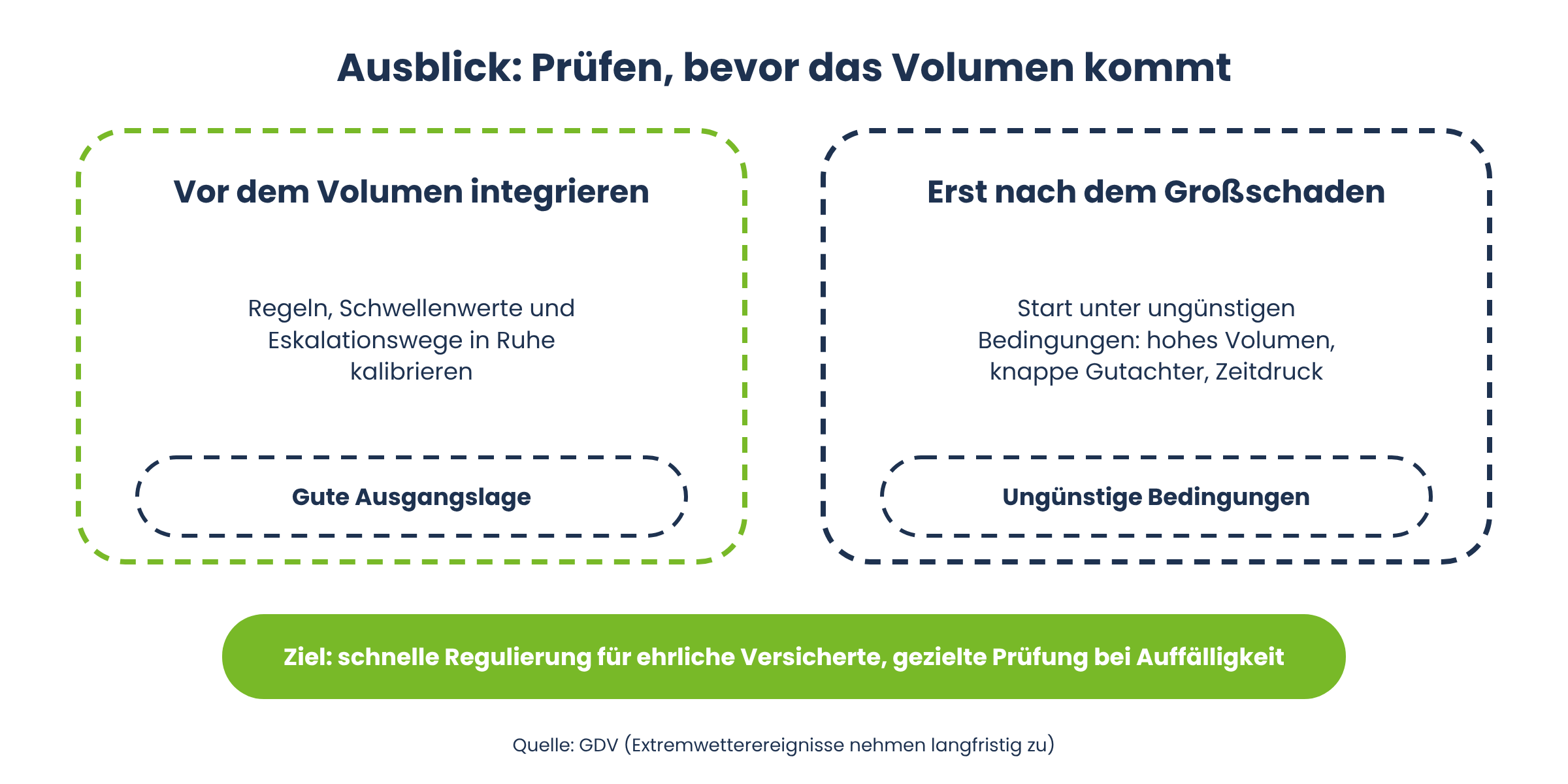
Outlook: Assess the Situation Before the Volume Picks Up
Generative models continue to improve, and according to the GDV, extreme weather events are on the rise in the long term. Those who wait until after the next major loss event to introduce automated image forensics will be starting under unfavorable conditions: high volume, a shortage of experts, and time pressure. Those who integrate it beforehand can calmly calibrate rules, thresholds, and escalation procedures.
Fairness also remains central. The goal is not blanket suspicion, but rather swift claims settlement for the overwhelming majority of honest policyholders—and targeted review where images raise red flags.
Automated image verification, metadata matching, duplicate checks, reverse searches, and explainable results make your claims settlement process robust and ensure it remains fast for honest policyholders. Want to see how this works with your own images? Then request your free fraudify live demo now.
FAQ: Frequently Asked Questions About Deepfakes in Auto Insurance
Reliable only with automated image forensics. It checks light, shadows, textures, file structure, and metadata, as well as duplicates and reverse searches—things that are easily overlooked during a visual inspection.
Yes, exactly those. When depth inspections are tied to threshold values, blind spots arise for minor and moderate damage—which is precisely where the bulk of the damage occurs.
The duplicate check also detects cropped, scaled, or otherwise formatted versions of the same image across different operations.
No. She sets priorities and explains her reasoning. Case workers, SIU, and evaluators make the decisions—and are deployed more strategically where images stand out.
Yes. fraudify offers modern application programming interfaces (APIs) and can be deployed in the cloud or on-premises.


