
A New Approach to Data Integration: Efficient ETL from Source to Analysis with Databricks Lakeflow
Companies are constantly storing massive amounts of data. Sensors, ERP systems, CRM solutions, cloud applications, and IoT devices deliver new information every second. Real value is only realized through the error-free consolidation, processing, and delivery of this data for later analysis.
This is where Databricks Lakeflow comes in. The platform combines data integration, ETL processes, and automation within a freely scalable lakehouse architecture. The system provides a centralized environment for traditional data warehouse applications as well as modern AI and machine learning processes.
This guide walks you through the entire process, from data collection to transformation and analysis. You’ll learn about the specific benefits for your business and how we can support you with your data integration.
Why is data integration essential today?
Almost all businesses use multiple programs at the same time. ERP systems, CRM solutions, factory machinery, online stores, Excel files, and cloud services constantly generate new data. Added to this are external sources, APIs, and data streams from IoT devices.
The real challenge lies in reliably consolidating this information. Data integration requires linking data from multiple systems. Only by making all this information available on a single platform can reliable analyses and well-informed decisions be made.
Many companies still work with scattered or outdated data sources. Different databases, various formats, and isolated applications make integration considerably more difficult. This results in data silos that block a unified view of operational data.
Another hurdle lies in the quality of the data. Duplicate entries, empty fields, or inconsistent master data make reports unreliable. Modern integration tools such as Databricks help companies permanently eliminate these problems.
What role do ETL processes play?
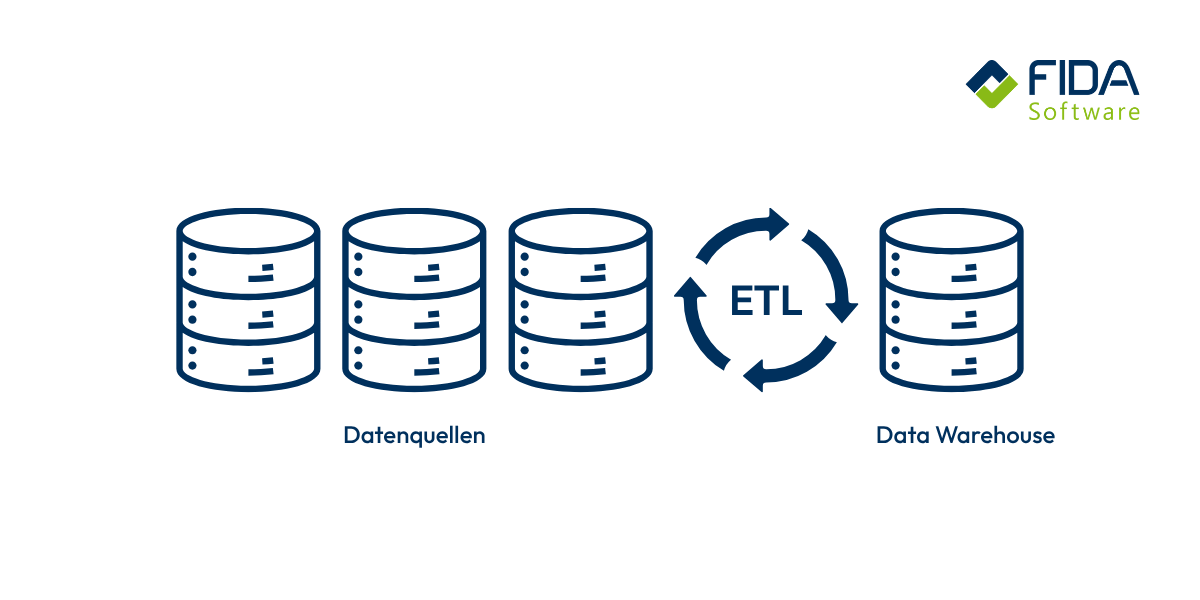
ETL stands for Extract, Transform, and Load. For many years, this approach has formed the basis of professional data integration.
The process is simple:
Extract data from various sources
Clean and transform the data
Load data into a target system
When dealing with massive amounts of data, traditional ETL structures reach their limits. That’s why modern lakehouses often use ELT. With this method, the data first flows into the platform unchanged, and the transformation takes place afterward. This approach makes more efficient use of the computing power of modern cloud infrastructures.
Databricks Lakeflow supports both approaches. This allows companies to choose the approach that best suits their specific workload. We’ll help you determine the right path for your project during our no-obligation initial consultation.
How does traditional ETL differ from Databricks Lakeflow?
Traditional ETL processes are struggling to keep up with the rapidly growing volume of information and the need for immediate data processing. Modern platforms like Databricks Lakeflow consolidate all steps—from initial data ingestion to the final analysis—into a single environment. This approach accelerates data integration, reduces the effort required to maintain the system, and enables new applications in the areas of business intelligence, artificial intelligence, and machine learning.
Compared to traditional ETL architectures, Databricks Lakeflow offers the following advantages, among others:
Support for ETL and ELT: In addition to traditional ETL processes, Lakeflow also supports ELT, allowing transformations to be performed flexibly after data ingestion.
Unified platform: Instead of using multiple specialized tools, data collection, integration, transformation, and analysis are all handled centrally on a single platform.
High scalability: Thanks to elastic cloud resources, the platform can easily scale to accommodate growing data volumes and increasing demands.
Batch and streaming: In addition to traditional batch processing, Lakeflow also supports real-time streaming for time-critical use cases.
Shared Lakehouse Architecture: Business intelligence, AI, and machine learning all access the same data source, thereby avoiding redundant data copies.
Centralized governance and automation: Uniform policies for security, access rights, and data quality ensure greater transparency and reduce administrative overhead.
A Centralized Data Repository: Instead of maintaining multiple copies of the same data across different systems, all teams work with consistent information.
Open standards: Support for technologies such as Apache Iceberg and open file formats increases interoperability and reduces vendor lock-in.
The comparison shows that modern lakehouses track data throughout its entire lifecycle significantly faster and with less effort than traditional ETL architectures. As a result, companies gain greater adaptability, ensure error-free data, and leverage a platform that combines traditional analytics with modern AI and machine learning techniques.
Why is real-time data so crucial today?
In the past, reports were often updated once a day. Today, daily updates are no longer sufficient in many areas. Companies want to be able to see at any time
how sales figures are trending,
which customers are currently shopping,
and which supply chains are at risk.
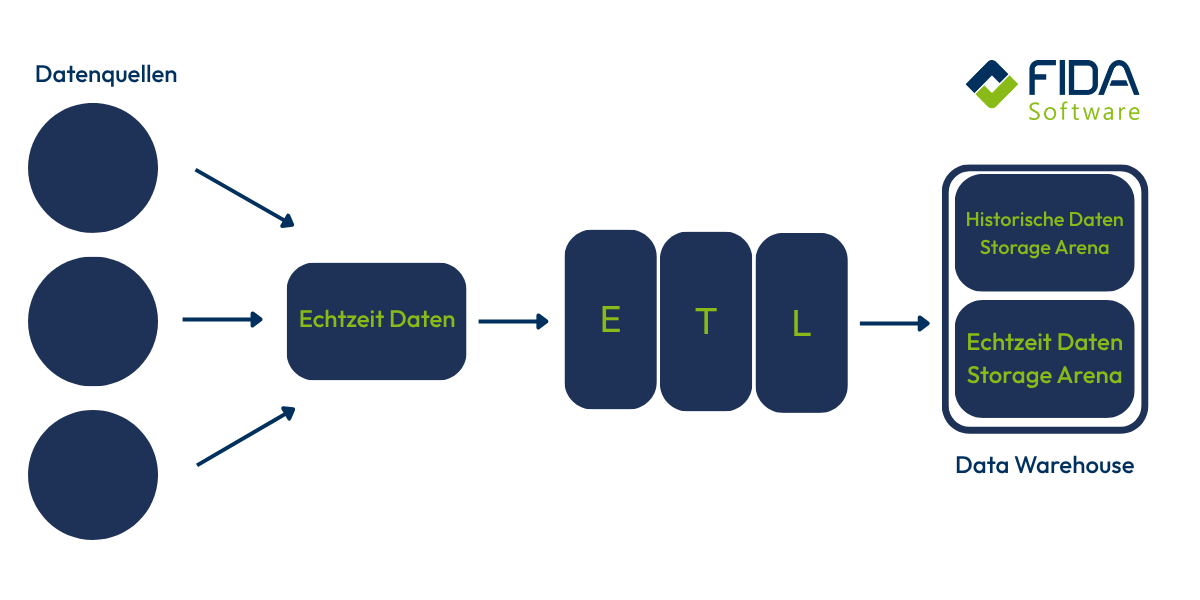
This is precisely why the demands on real-time processing are constantly increasing. Real-time data pipelines provide immediate insights into data by consolidating information from hundreds of sources and minimizing the delay between data collection and analysis.
In IoT applications in particular, streaming pipelines continuously process incoming events. This enables companies to respond more quickly and automates business processes.
What is Databricks Lakeflow?
Databricks Lakeflow is a solution for end-to-end data integration within the Databricks platform. The goal is to centrally map all steps of a data pipeline:
Data collection
Integration
Transformation
Quality assurance
Governance
Preparation for Analysis
Lakeflow thus enables end-to-end data pipelines within a single platform. Instead of connecting numerous individual tools, companies gain an integrated environment for the entire lifecycle of their data.
What is the workflow like within Databricks Lakeflow?
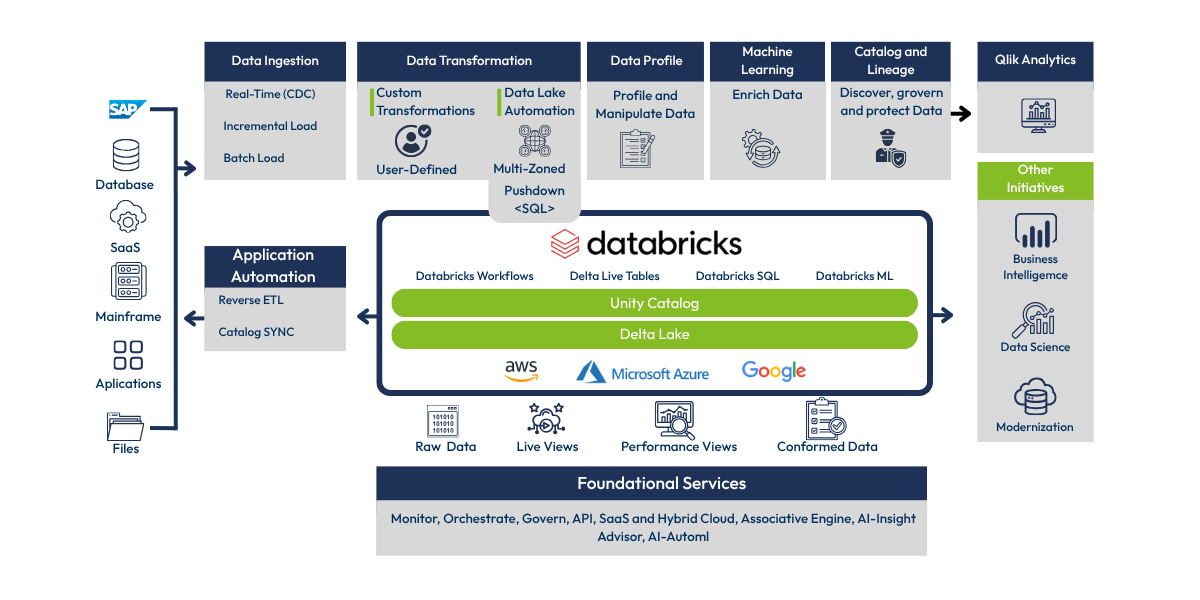
The typical workflow within Databricks Lakeflow is as follows:
1. Data ingestion
Information is ingested from relational databases, SaaS systems, APIs, cloud applications, or files. Databricks supports numerous native connectors for a wide variety of data sources.
2. Loading
After ingestion, the data is initially stored as-is. It is often stored in cloud object storage, which allows for the cost-effective management of virtually unlimited amounts of data.
3. Transformation
In the next step, the data is transformed. SQL, Python, or Apache Spark are used for this. Transformation includes, for example:
Cleaning
Duplicate detection
Standardization
Aggregation
Validation
ELT allows transformations to be performed only after data ingestion.
4. Analysis
The processed data is then available for
dashboards
Business Intelligence
machine learning
AI applications
data science
Operational Analyses
are available. This significantly shortens the time between data collection and insight.
What is the Auto Loader?
One of the most important features within Databricks Lakeflow is the Auto Loader. Auto Loader automatically detects new data in cloud storage. Instead of regularly re-reading entire directories, Auto Loader processes only newly arrived files. This reduces:
Computing costs
Storage requirements
Latency
Administrative overhead
Especially with continuously growing data sets, this approach significantly improves the efficiency of the entire data processing workflow.
Batch and Streaming on a Single Platform
Some applications process data at night using the traditional batch method, without time constraints. Other programs analyze events within a matter of seconds. Databricks is suitable for both approaches. The platform processes data in batches and transmits data streams without noticeable delay. Developers can integrate traditional reports and AI applications into a single system architecture.
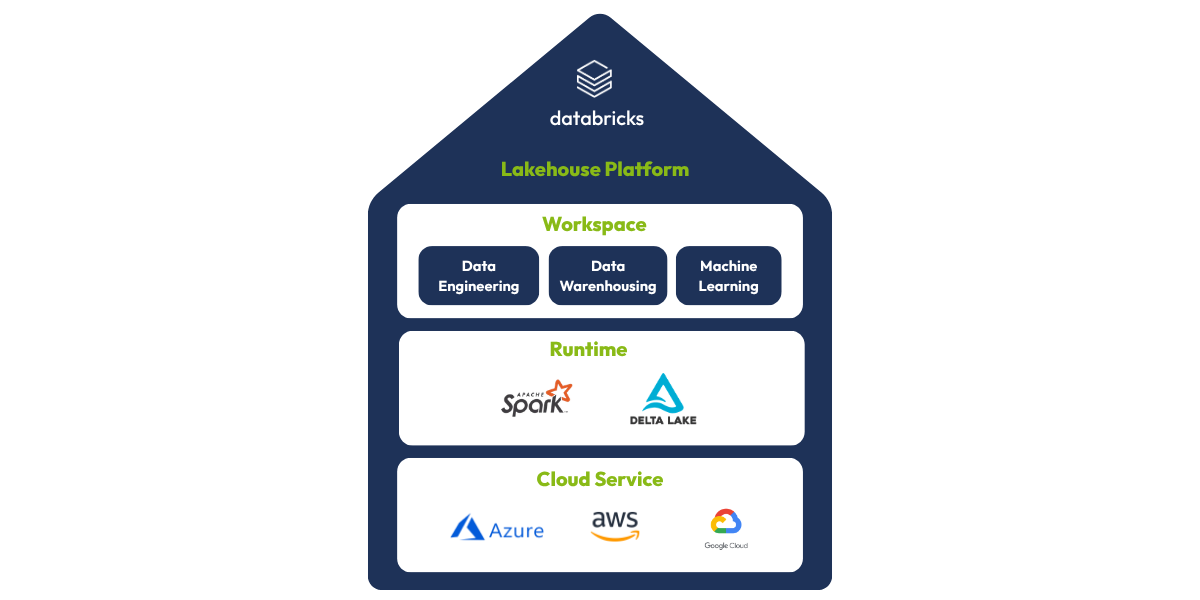
Why does the Lakehouse architecture form the foundation of modern data platforms?
The demands placed on data platforms have been undergoing a fundamental shift for several years. Businesses require unified analytics for structured data from ERP systems, semi-structured information from applications, and unstructured files from a wide variety of sources. Traditional data warehouse solutions often fall short when it comes to these tasks.
This is where the lakehouse concept comes in. A lakehouse combines the flexibility of a data lake with the proven capabilities of a data warehouse. This architecture enables business intelligence, AI, machine learning, and operational analytics on a unified foundation.
Data lakehouses bring together data lakes and data warehouses. They utilize cost-effective cloud object storage, which allows for the economical management of massive amounts of data. For companies, this means:
Storage of structured and unstructured data
a central platform for all workloads
lower infrastructure costs
High scalability in the cloud
fewer data silos
While traditional data warehouse solutions often require separate storage systems and tools, modern lakehouses enable a unified architecture.
What is the Medallion Architecture?
A key component of Databricks Lakeflow is the so-called Medallion Architecture. This architecture categorizes data into three quality levels.
Bronze
The Bronze level contains the raw data. Here, all information is initially stored unchanged. Erroneous data records are retained so that it is possible to trace at any time what information was originally delivered.
Silver
In the Silver tier, the data is cleaned. The following processes take place here:
Transformation
Validation
Standardization
Duplicate detection
Quality checks
This level often serves as the foundation for operational applications.
Gold
The Gold level contains business-critical information. This is where the following are generated:
Reports
Dashboards
Key metrics
Machine learning features
BI analyses
What is the purpose of the Unity Catalog?
As the volume of data increases, so does the importance of centralized governance. Companies must be able to track
who is accessing data,
what information has been modified,
and which legal requirements apply.
This is where Unity Catalog comes in. Unity Catalog enables centralized data governance and auditing. The solution supports:
Role- and permission-based models
Data classification
Lineage
Auditing
Security policies
Centralized governance enhances security and transparency across the entire platform. This aspect is becoming increasingly important, especially for regulated industries.
How do ACID transactions ensure data consistency?
Modern lakehouses store massive amounts of data while delivering error-free, consistent results. For this reason, Databricks uses the Delta Lake system. Delta Lake extends the data lake with features from traditional relational databases. These primarily include what are known as ACID transactions. These ACID transactions ensure the reliability of the data in the lakehouse. As a result, multiple processes can write to or read data simultaneously without creating inconsistencies in the data records.
This improves:
Reliability
Data quality
Performance
Traceability
How Do Real-Time Data Pipelines Create a Competitive Advantage?
Many companies prefer to make decisions immediately. For this reason, fast data pipelines are becoming increasingly important. Databricks Lakeflow processes data batches and streams them live at the same time. The system establishes data pipelines that deliver information with no noticeable delay. These pipelines display data changes in real time. They capture signals from sensors as well as data from operational software.
Additional benefits include:
Low-latency processing
Integration from hundreds of sources
Automatic scaling
Continuous updating
Studies also show that real-time data pipelines can reduce data collection costs by up to 80 percent by eliminating redundant processing steps.
How Does Standardized Data Collection Improve Maintainability?
The more applications are integrated, the more important uniform data collection becomes. Standardized data collection supports maintainability and interoperability. Instead of developing custom scripts for each application, centralized pipelines are established. As a result, companies benefit from:
fewer errors
lower maintenance costs
faster implementation
greater reusability
In addition, continuous monitoring of pipeline runtimes improves the data integration strategy in the long term.
How do I integrate Databricks Lakeflow into existing system environments?
Virtually no business starts from scratch without an existing IT infrastructure. In most cases, numerous programs, data storage systems, and cloud services are already in operation and continue to run as usual. A modern data platform seamlessly connects these diverse systems.
Databricks Lakeflow simplifies this process with numerous built-in connections as well as integration tools. The platform retrieves data directly from ERP systems, CRM solutions, traditional databases, data lakes, cloud applications, and application programming interfaces (APIs).
Databricks provides these connection elements for many data sources out of the box. This saves development time when setting up new data channels. Systems that are frequently connected include:
Microsoft SQL Server
Microsoft Azure Storage
Microsoft Fabric
Microsoft Dynamics 365
SAP
Salesforce
Oracle
PostgreSQL
MySQL
Kafka
Amazon S3
Azure Data Lake Storage
Google Cloud Storage
Standardized integration makes it easier to build a future-proof data architecture.
Is Microsoft Azure a suitable cloud environment for Databricks?
Many companies already rely on Microsoft technologies. That’s why Databricks’ tight integration with the Microsoft ecosystem is a key advantage. Within Microsoft Azure, the following services—among others—can be combined:
Microsoft Azure Data Lake Storage
Microsoft Entra ID
Microsoft Power BI
Microsoft Fabric
Microsoft Defender
Microsoft Purview
Microsoft SQL Server
Microsoft Synapse Analytics
Thanks to the shared cloud environment, companies benefit from unified user management, centralized security policies, and easy scalability. Companies that already rely on Microsoft, in particular, can continue to leverage their existing investments.
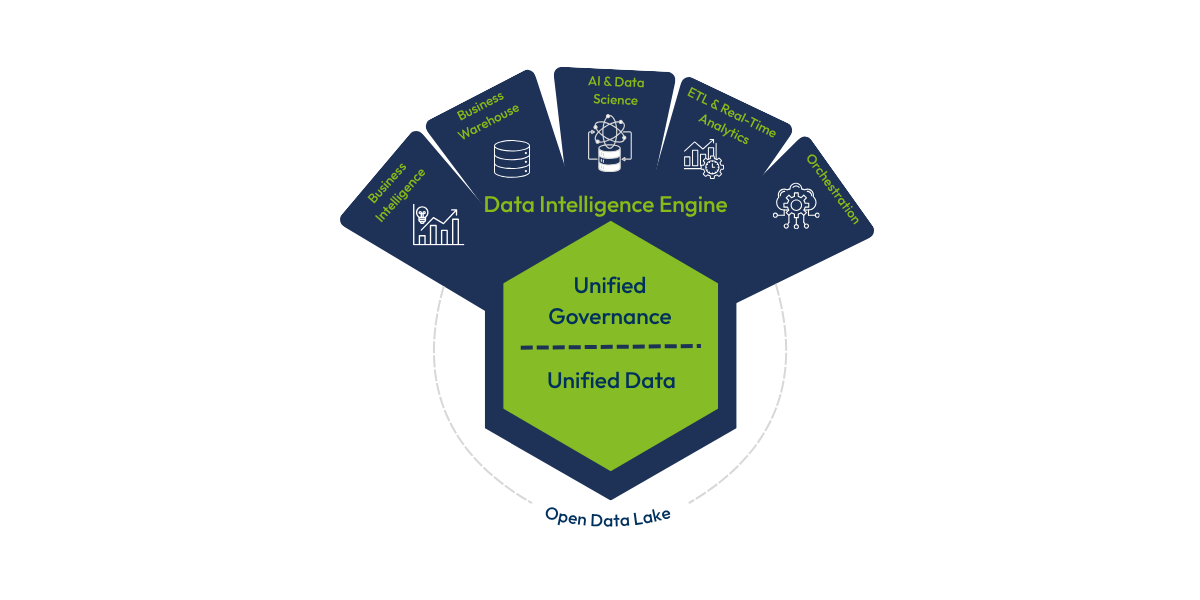
Why should business intelligence and AI run on the same platform?
In the past, business intelligence, machine learning, and AI were often run on different platforms. This resulted in:
redundant copies of data
inconsistent metrics
high maintenance costs
inconsistent results
A modern lakehouse takes a different approach. All teams access the same data. As a result, business intelligence, data science, machine learning, and AI operate on a shared foundation. The benefits are numerous:
Consistent metrics
faster analyses
fewer data movements
higher data quality
better collaboration between departments
Powerful AI models require error-free and complete data to function reliably. Incomplete or contradictory data noticeably degrades the results of modern applications. Success therefore begins before the actual model is built—with the proper consolidation of all data sources. The Databricks Lakeflow platform streamlines this process by importing, filtering, and validating information. Only then is a robust foundation established for:
Generative AI
Traditional AI
Machine Learning
Predictive Analytics
Intelligent automation
High data quality therefore directly improves the quality of subsequent predictions and analyses.
How can machine learning workloads be run using Databricks?
In addition to traditional BI applications, Databricks supports a wide range of machine learning workloads. These include, for example:
Predictive models
Anomaly detection
Image processing
NLP applications
Recommendation systems
Since all training data is already available in the Lakehouse, there is no need for time-consuming data migration between different platforms. Even large workloads can be efficiently processed by the scalable engine.
How can monitoring with Databricks improve your data strategy?
A modern data strategy doesn’t end after the first successful implementation. Equally important is the continuous monitoring of the entire data platform. This includes, among other things:
Pipeline runtimes
Error rates
Data volumes
Resource utilization
Load times
Cost Trends
Monitoring pipeline runtimes improves data integration strategies by enabling the early detection of bottlenecks. This provides companies with a solid foundation for the continuous optimization of their data strategy.

Streamline the Entire ETL Process with Databricks Lakeflow
The demands placed on modern data platforms are constantly growing. Today, companies must consolidate data from a wide variety of sources, process it in real time, and make it available for business intelligence, AI, and machine learning. At the same time, requirements for data quality, governance, and scalability are increasing.
Databricks Lakeflow offers a powerful solution that maps the entire data lifecycle within a single platform. From data ingestion through ETL and ELT processes to analytics, companies benefit from a unified architecture that supports both batch and streaming workloads.
With features such as Auto Loader, the Medallion Architecture, Unity Catalog, Delta Lake, and support for open standards like Apache Iceberg, Lakeflow significantly simplifies the development and operation of modern data pipelines. At the same time, centralized governance mechanisms and a high degree of automation lay the foundation for a secure, transparent, and future-proof data strategy.
Especially when combined with existing solutions such as Qlik, Talend Cloud, or the Microsoft Azure ecosystem, Databricks Lakeflow can be seamlessly integrated into existing IT landscapes. Companies can continue to use their existing systems while benefiting from a modern lakehouse architecture.
For those looking to make their data integration more efficient in the long term, break down data silos, and create a unified foundation for analytics, AI, and data-driven decisions, Databricks Lakeflow offers a powerful platform.
We support companies in implementing and operating Databricks and ensure that data integration runs smoothly.
FAQ: Frequently Asked Questions About Databricks Lakeflow and ETL
Databricks Lakeflow is a solution within the Databricks platform for developing and managing modern ETL and ELT processes. It helps companies automatically collect and transform data from various sources and make it available for analytics, business intelligence, and AI applications.
In traditional ETL, data is first extracted, then transformed, and finally loaded into the target system.
With ELT, data is first ingested. The transformation takes place only within the target platform. Modern lakehouse architectures such as Databricks support both methods and allow you to choose the appropriate approach depending on the use case.
A lakehouse combines the flexibility of a data lake with the analytical capabilities of a data warehouse. Companies can store structured, semi-structured, and unstructured data on a single platform and use it for business intelligence, machine learning, and AI applications. At the same time, this reduces the number of data copies and the effort required to manage different systems.
Auto Loader automates data collection from cloud storage. New files are automatically detected and processed without having to re-scan entire directories. This reduces computational load, latency, and operating costs.
Yes. Databricks Lakeflow supports both traditional batch processing and real-time streaming. Companies can continuously process incoming data from IoT devices, applications, or databases in near real time and make it available for analysis.
With Unity Catalog, Databricks provides a centralized solution for data governance. It enables the management of access rights, data classifications, auditing, and data lineage. This improves security, transparency, and compliance across the entire data platform.
Yes. Databricks Lakeflow integrates seamlessly into existing Microsoft Azure environments and also works with solutions such as Qlik Talend Cloud. While Qlik Talend Cloud handles data collection and replication, Databricks can perform further transformation, analysis, and delivery of the data in the lakehouse.
Databricks Lakeflow is particularly well-suited for companies that want to integrate large volumes of data from various sources, build modern data pipelines, and create a central platform for business intelligence, AI, machine learning, and data engineering. Thanks to its scalable cloud architecture, the solution is suitable for both medium-sized companies and large organizations.


